
Canyoning Auckland for a Rainforest Rush

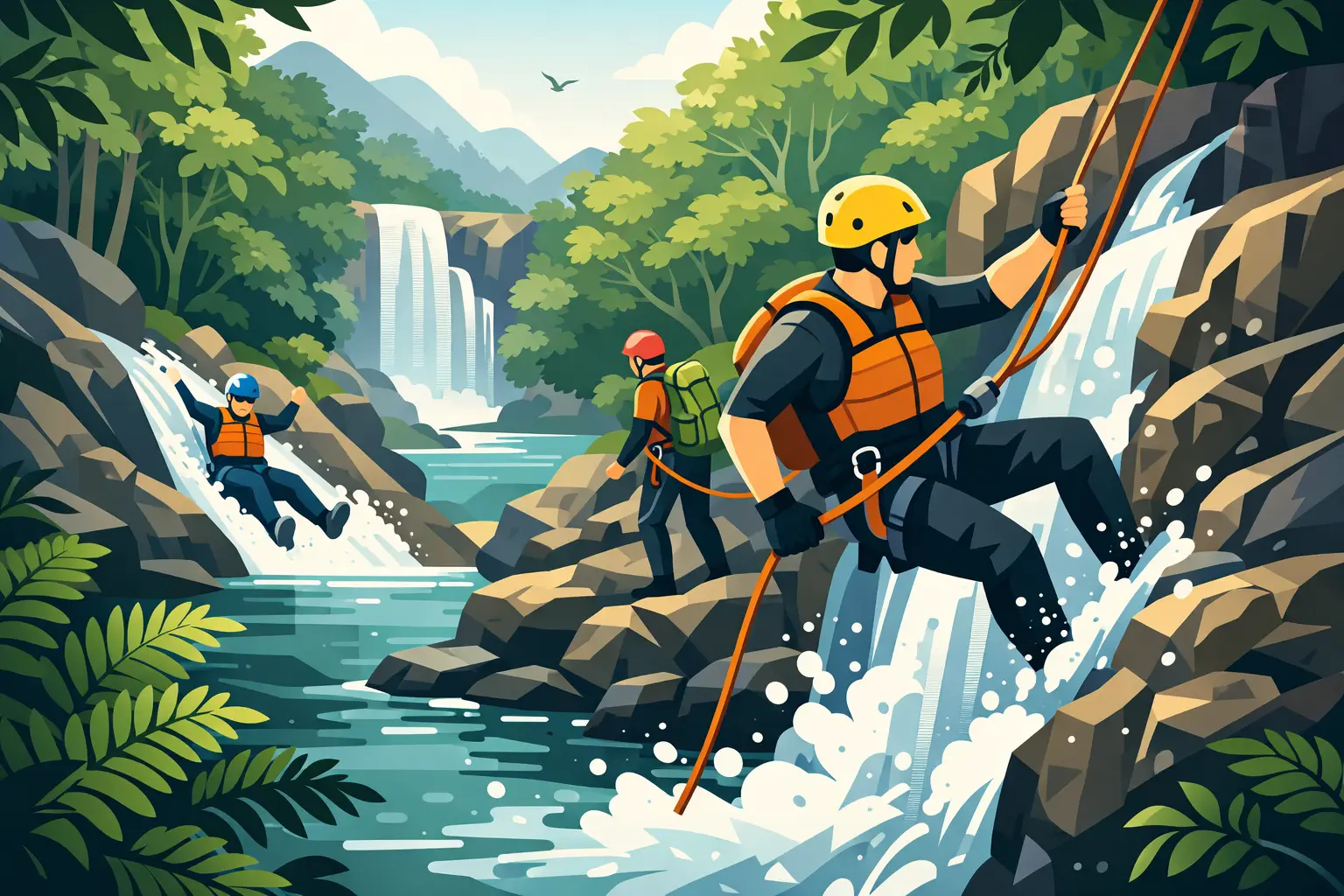
Forty minutes from central Auckland, the road gives way to black-sand coast, dense native bush and waterways hidden beneath the Waitākere Ranges canopy. That is what makes canyoning Auckland such a standout day out: you can be stepping backwards over a waterfall, squeezing through a rocky gorge or floating beneath glowworms without spending half your holiday getting there.
This is not a walk beside a waterfall. It is a full-body rainforest mission. You will get wet, scramble over rocks, descend on ropes and find out that the view from the top of an abseil feels very different from the photo. The good news? You do not need to arrive as a canyoning expert. A guided trip provides the gear, the skills briefing and the encouragement to get stuck in.
Pick the Canyoning Auckland Trip That Suits Your Crew
The best trip is not automatically the biggest or wettest one. It depends on your time, confidence, fitness and what you want to remember when your legs are tired and your camera roll is full.
Go full day for the complete canyon mission
A full-day trip is for people who want the big story. Expect major abseils beside or through waterfalls, natural water slides, jumps where conditions allow, narrow passages, caves and a proper stretch of wild Waitākere rainforest. There is time to settle into the rhythm of the canyon, build confidence on the rope and enjoy the scenery rather than racing through it.
This option suits active visitors with a free day, friend groups after a shared challenge, and locals who want to swap the usual weekend plans for something far less ordinary. It is physical, but it is not about being the fastest person in the group. It is about listening, having a go and enjoying every soaked, grinning minute.
Choose a half day for a first taste
Short on time, slightly unsure about heights or bringing a mixed-confidence group? A half-day canyoning trip can be the smart call. You still get the buzz of moving through real rainforest terrain and learning canyon skills, without committing to a whole day in the water.
It is also a great introduction before booking a bigger trip later. The trade-off is simple: less time in the canyon means fewer features and a shorter adventure. If you know you want the bigger abseils and the full range of terrain, book the longer experience from the start.
Make it a night mission for glowworms
Night canyoning changes the mood completely. Once the light fades, the bush becomes quieter, your headtorch takes over and glowworms light up the gorge like tiny stars. You may still be abseiling, wading and scrambling, but the darkness sharpens every sound and makes the rainforest feel wonderfully remote.
It is a brilliant choice for Auckland locals looking for a midweek hit of adventure, couples after a very different date night, or anyone who has seen glowworms from a boardwalk and wants a more hands-on way to find them. A night trip requires a little more trust in the guide and the process, so arrive ready to follow instructions closely and embrace the unknown.
What a Guided Canyoning Day Actually Feels Like
First comes the briefing. Guides talk you through how to wear the harness and helmet, how the ropes work, how to move safely on slippery ground and what to do at each obstacle. Ask questions here. There is no prize for pretending you understand something when you do not.
Then comes the first proper moment of commitment: edging towards a drop, feeling the water rush past and leaning back into the rope. Nearly everyone pauses. That is normal. Good canyoning guides break the challenge into clear steps, keep communication simple and give you the space to find your feet – or, more accurately, your footing on the rock.
After that, the canyon tends to take over. One minute you are hiking through ferns and nikau palms, the next you are standing waist-deep in a pool, moving through a tight gorge or laughing at a friend who has just emerged from a waterfall looking completely stunned. The physical challenge matters, but so does the social side. Canyoning is one of those activities where strangers quickly become a team.
At AWOL Canyoning Adventures, the experience is built around guided access to this rugged terrain, with training and essential equipment included. That leaves you free to focus on the fun rather than trying to work out what a descender does in a car park.
Do You Need Experience or Serious Fitness?
No previous canyoning experience is needed for beginner-friendly guided trips. You do, however, need a willingness to move. Canyons involve uneven ground, steps, rock scrambling, water and periods of sustained activity. You should be comfortable being outdoors, able to follow instructions and happy getting fully wet.
Fitness is not one fixed standard. Someone who runs every weekend may find the physical effort easy but feel nervous on a high abseil. Another person may be calm with heights but need more breaks while walking. Tell the operator about your experience, any injuries, medical considerations or worries before you book. They can help match you to the right trip rather than putting you on something that is more ordeal than awesome fun.
Families and groups with a broad range of abilities should be especially honest about this. The right adventure challenges people without leaving anyone feeling pushed beyond their limit.
What to Bring for the Canyon
Your guide supplies specialist canyoning gear, but a little preparation makes the day more comfortable. Wear swimwear under your clothes, bring a towel and pack dry underwear for afterwards. A warm layer for the journey home is a very good idea, particularly after a winter trip or night session.
Leave jewellery and valuables behind. If you take medication, make sure the guide knows about it and ask how it can be carried securely. For glasses, use a strap. For contact lenses, consider whether water and splashing will be a nuisance. And if you are bringing a mobile phone for photos, assume it needs genuinely waterproof protection, not merely a hopeful zip bag.
Food needs vary by trip length, so check what is included and what you need to bring. For a full day, eat a decent breakfast first. Rainforest adventure is more enjoyable when you are not running on a flat white and optimism.
Respect the Waitākere Ranges While You Play
The scenery is breath-taking because it is still a living, fragile place. The Waitākere Ranges are home to native birds, ancient forest and waterways that need careful protection. Stay with your group, follow access instructions and clean footwear and gear as directed to help prevent the spread of kauri dieback.
Canyoning also depends on conditions. Rain can make a canyon dramatic, but too much water can change the plan or rule out a route entirely. That is not a disappointing technicality – it is professional decision-making. A guide who adjusts the day for weather, water flow or group ability is looking after the adventure as well as the people in it.
Make It More Than a Booking
Canyoning works brilliantly for birthdays, visiting mates, hens and stags who want a story better than a bar tab, and work teams tired of forced fun in a meeting room. It gives everyone a genuine role: encouraging at the abseil, celebrating the jump, carrying the energy when the walk gets tough and sharing the inevitable post-canyon tales.
For corporate, school or larger private groups, a customised day can add adventure racing or rogaine-style challenges around the canyon experience. That extra structure is useful when the aim is teamwork, communication and problem-solving rather than simply ticking off a big activity.
If you are choosing between a city attraction and a day in the Waitākere Ranges, choose the story you want to take home. Bring your sense of humour, listen to your guide and save a dry set of clothes for afterwards – the rainforest will handle the rest.