
Piha Beach Activities for an Epic West Coast Day

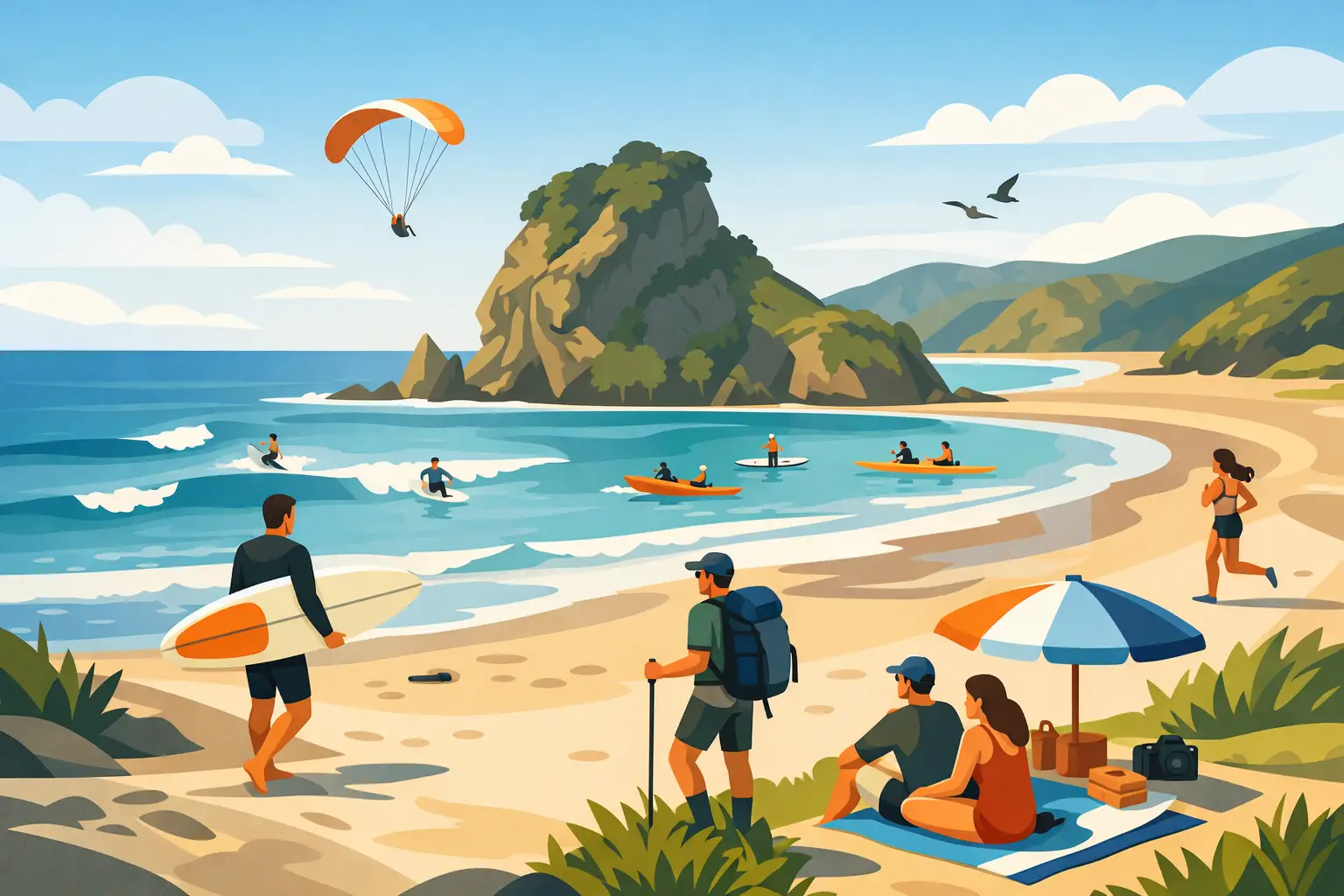
Piha is not a beach you visit for a quick paddle and a flat white. It is black sand under your feet, big Tasman surf in front of you and steep rainforest rising straight behind the dunes. The best Piha Beach activities make the most of that wild mix: get moving early, respect the ocean, then trade the shoreline for the tracks, waterfalls and rock-walled gullies of the Waitākere Ranges.
For visitors and Auckland locals alike, Piha delivers a full-on day outdoors without a huge road trip. You can build your own relaxed beach-and-walk day, or go bigger with a guided canyoning mission that puts you right in the action.
Start with the beach and Lion Rock
Lion Rock is Piha’s unmistakable landmark, splitting North Piha from South Piha and rising above the centre of the beach. It is the first thing most people photograph, but it is also a useful way to get your bearings. Walk the black sand below it, take in the scale of the coast and watch how quickly the weather and surf can change.
The sand gets hot on clear summer days and the beach is long enough to feel surprisingly open, even when the car park is busy. North Piha is generally where the main activity happens, while South Piha can feel quieter and more remote. Both are brilliant for a beach walk, but neither is a place to get casual about the sea.
Piha’s surf is powerful, with rips, changing banks and heavy shore break. Swim only between the flags when lifeguards are on patrol, keep children close, and do not let a good photo spot tempt you onto wet rocks or into rough water. If the conditions look serious, they are. Enjoy the drama from shore and save your energy for the rest of the day.
Catch a wave or watch the experts
Surfing is one of the classic Piha Beach activities, and it suits the place perfectly. The beach has a long surfing history, a strong local surf culture and waves that can be genuinely demanding. Experienced surfers will find plenty to read in the conditions. Newcomers are better off starting with a lesson and listening closely to local advice on where and when to enter the water.
A lesson is worth it if you have never surfed before or have only tried it in gentler conditions. You will get the basics of board handling, pop-ups and surf safety, plus someone who can choose a more suitable spot on the day. The goal is not to prove anything. It is to catch a few good waves, have a laugh and come in feeling like you want another go.
Not keen on paddling out? Grab a spot on the sand and watch. Piha can put on a proper show when the swell is up, and you will quickly see why ocean awareness matters here.
Walk for the views, then earn your lunch
Piha’s coastal scenery rewards anyone willing to put in a few steps. A wander around the beach at low tide gives you dramatic views of Lion Rock, the cliffs and the dark volcanic sand stretching towards the headlands. For a bigger hit of scenery, choose a nearby track that is open and suits your group’s fitness.
Track conditions in the Waitākere Ranges can change after storms, slips or conservation work, so check current access information before setting off. Do not assume an old blog post or a pin on a map means a route is open. Take water, a rain layer, decent footwear and more food than you think you will need, especially if you are travelling with kids or visitors unused to New Zealand’s changeable weather.
A beach walk works for nearly everyone. A steep bush track is a different proposition. It depends on the weather, your footwear and how much time you have before sunset. Pick the version of Piha that leaves the group buzzing, not limping back to the car.
Go beyond the beach with canyoning
If you want the story your mates will actually ask about afterwards, head into the rainforest. Canyoning takes Piha’s wild landscape off the viewing platform and puts you in it. You could be abseiling beside waterfalls, moving through narrow gorges, scrambling over rocks, jumping into clear pools and passing through caves beneath the forest canopy.
This is not a DIY mission for people who fancy themselves handy with a rope. A guided trip means qualified guides manage the technical systems, teach you what you need to know and provide the specialist equipment. That removes the gear barrier while keeping the challenge very real.
AWOL Canyoning Adventures runs guided experiences in the Piha rainforest for complete beginners as well as confident outdoor types looking for a bigger day. No previous canyoning experience is needed. You get training before the action starts, and the guides will talk you through each descent, jump and obstacle so you can build confidence as you go.
The full-day option is for people ready to commit to the works: major abseils, waterfalls, caves, jumps and breath-taking rainforest scenery. A half-day trip is a smart call if you are short on time, testing your nerve or organising a group with mixed experience. Night canyoning brings another layer altogether, with glowworms lighting up the bush after dark. It is one of those rare Auckland experiences that feels miles from city life, even though it is close enough to fit into a short break.
Choose the right adventure for your group
Piha works brilliantly for couples, friend groups, families with capable older children and visitors who want more than a lookout-and-selfie itinerary. The right plan depends on what your group is really after.
If the priority is a relaxed day, stick to the beach, a short walk and a slow lunch. If half the group wants action and the other half is nervous about technical adventure, a guided introductory canyoning trip is often the sweet spot. Everyone starts with the same briefing, equipment and support, so the confident ones still get their thrills without anyone being left behind.
For a stag or hen group, birthday, team day or visiting friends, choose an experience that creates shared moments rather than splitting everyone into separate activities. Canyoning does that well. You encourage each other down the first abseil, laugh at the cold-water reactions and finish with the kind of group photos that do not look staged.
Fitness matters, but you do not need to be an elite athlete to have an awesome time. You do need to be comfortable being active, walking on uneven ground and getting wet. Be honest about injuries, medical conditions and confidence around heights when booking. A good adventure starts with choosing a trip that matches the people actually coming along.
Pack for a proper west coast day
Piha can run through sunshine, wind and rain in the same afternoon. Bring a towel, dry clothes for after the beach or canyon, water, snacks, sun protection and a warm layer for the journey home. Wear footwear that can handle sand and uneven ground. If you are joining a guided canyoning trip, follow the pre-trip kit advice and let the operator provide the technical gear.
Keep the place wild by taking rubbish home, using the cleaning stations where provided and following all track and kauri protection guidance. The rainforest and coastline are the reason Piha hits so hard. Treating them with care is part of the adventure, not an optional extra.
Make the timing work
Give Piha a full day if you can. Arrive early for quieter sand and easier parking, build your plans around the weather and surf conditions, and leave a little buffer for the drive back. A wet forecast does not automatically ruin the day – in the bush, rain can make waterfalls roar and the forest feel even more alive – but strong winds or rough seas can change what is sensible on the coast.
The best days here are not over-planned. Start with the black sand, listen to the ocean, choose an activity that stretches you just enough, and head home with salt on your skin or canyon water in your boots. Piha has a habit of turning an ordinary free day into a proper story.