
Is Canyoning Safe for Beginners? What to Know

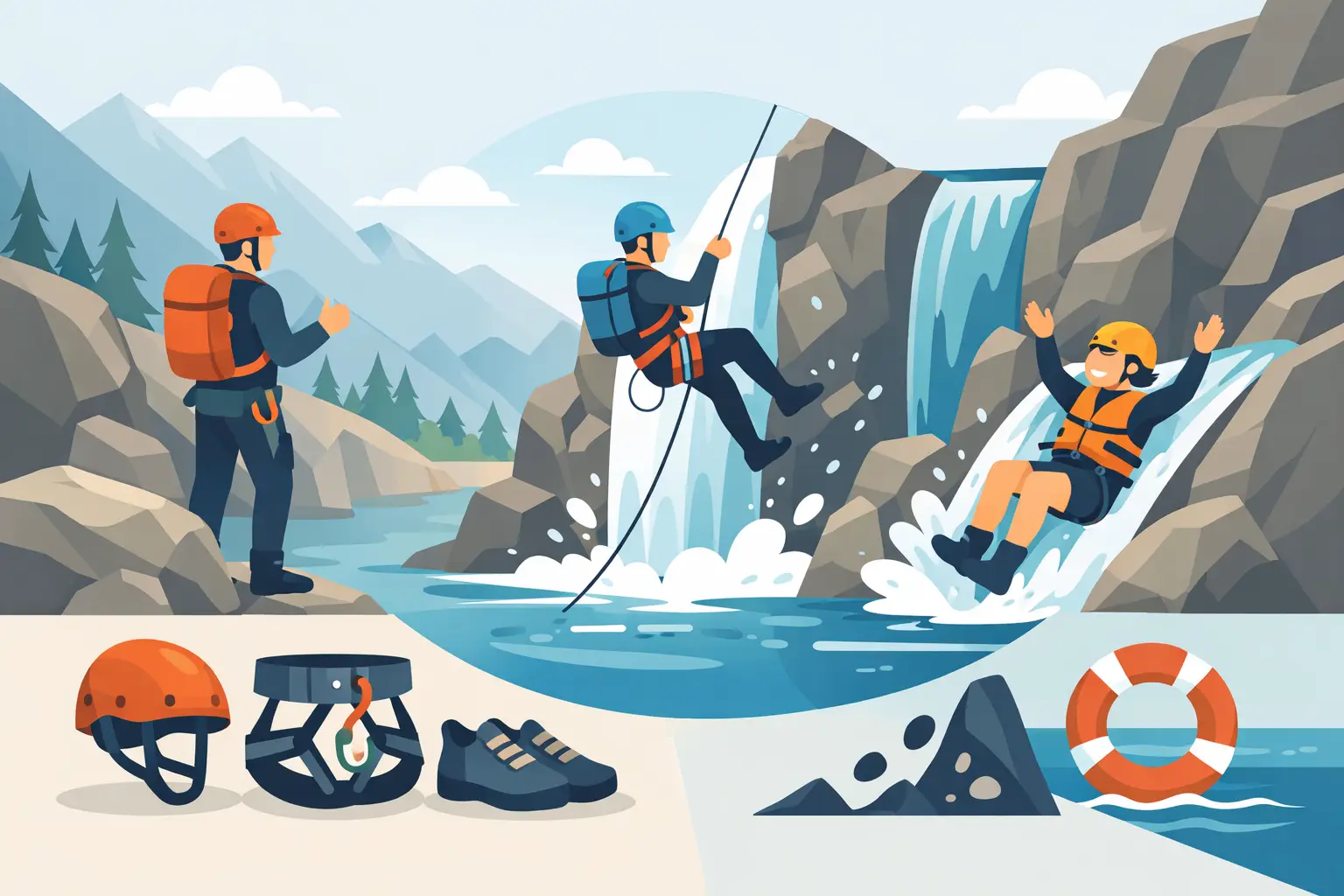
The first time you stand above a waterfall with a rope clipped to your harness, the question is fair: is canyoning safe for beginners? It can be, when you choose a professionally guided trip that matches your ability, listen closely to the briefing and accept that getting wet, muddy and a little outside your comfort zone is part of the fun.
Canyoning is not a theme-park ride. Rivers change, wet rock is slippery and a waterfall can feel seriously big when you are at the top of it. That is exactly why a good beginner experience is built around trained guides, proper equipment, clear instruction and sensible decisions in the moment. You bring a willingness to get stuck in. Your guides bring the systems that make the adventure possible.
Is canyoning safe for beginners on a guided trip?
For most active beginners, guided canyoning is a very manageable way to try abseiling, water jumps, scrambling and gorge travel for the first time. No previous canyoning experience is needed on an introductory trip. You do not need to own ropes, wetsuits or a shed full of technical gear either.
The key word is guided. A professional guide does far more than point at a waterfall and say, “Off you go.” They assess conditions, choose the appropriate route, teach you how to use the equipment, set up rope systems, manage the group’s pace and adjust the plan if weather or water levels demand it.
At AWOL Canyoning Adventures, beginners are shown the skills before they need them. That may mean learning how to sit back in your harness while abseiling, where to place your feet on wet rock, how to enter a pool safely and how to move through a narrow section of canyon as a team. You will have support at the places that feel biggest, rather than being expected to work it out halfway down a waterfall.
Safe does not mean risk-free. Outdoor adventure always carries an element of risk, and anyone promising otherwise is not being straight with you. It means risks are actively identified, reduced and managed by experienced people using the right procedures and equipment.
What makes a beginner canyoning trip safer?
A well-run trip starts long before the first splash. Guides check the forecast and conditions, then make a call on whether a canyon is suitable to enter. Heavy rain can alter water flow quickly, and the right decision is sometimes to change a route, shorten a trip or postpone it. That is not a ruined day. It is good judgement.
Once you are on the trip, fitted equipment matters. A wetsuit helps keep you warm in cool water, a helmet protects your head around rock, and a properly adjusted harness is essential when ropes are involved. Specialist canyoning footwear or suitable shoes provide more grip than ordinary trainers, although no footwear makes slick rock completely non-slip.
There is also a difference between an adventure that looks dramatic and one that is chaotic. Big waterfalls, dark caves and rainforest pools make brilliant memories, but the group should move through them in a controlled order. Guides explain the next move, check everyone understands it and position themselves where they can assist. On an abseil, the rope system is set up and supervised. At jumps, guides assess the landing area and make it clear when a jump is optional or when another route is better.
Group size and group behaviour play a part too. Canyoning is social, and a good crew can make the day even better. But it is not the place to rush ahead, dare a mate into something or ignore an instruction because you want a faster photo. The strongest groups communicate, wait their turn and look out for one another.
The right trip matters more than bravado
Not every canyoning trip is designed for every first-timer. A half-day introductory adventure may be the better choice if you are curious about canyoning but unsure how you will feel with heights, cool water or a full day in the bush. It gives you a real taste of the action without committing to the longest, most demanding route.
A full-day experience can suit beginners too, especially if you are reasonably active and keen for the full rainforest mission: bigger abseils, waterfalls, pools, caves and plenty of time in spectacular terrain. The trade-off is that it requires more stamina. You may be walking over uneven ground, climbing around boulders and staying focused for several hours, even when you are tired.
Night canyoning brings another level of atmosphere. Moving through the bush after dark and seeing glowworms can be magic, but low light changes how people judge distance and footing. This is where following the guide’s instructions and staying with the group matters even more.
When booking, be honest about your fitness, confidence in water and any medical concerns. You do not need to be an elite athlete, but you should be comfortable being active outdoors and able to cope with uneven terrain. If you are nervous around heights, say so. If you have an old knee injury, asthma, a heart condition, are pregnant or take medication that could affect you, raise it before the trip. A reputable operator would rather have a useful conversation early than leave you worried on the day.
What beginners often worry about
“I have never abseiled before”
That is normal. Most first-time canyoners have not. Your guide will explain the technique on dry ground or a straightforward practice section before the main event. You will learn how the rope supports you, how to control your descent and how to position your body. The first lean-back moment can feel strange, then it often clicks very quickly.
You do not need upper-body strength to haul yourself down a waterfall. Good abseiling is more about technique, balance and listening. Take your time, keep your feet wide where instructed and let the guide coach you through it.
“What if I do not want to jump?”
Ask before you book how jumps are handled on the route you are considering. On many guided canyoning trips, jumps are chosen only where conditions allow and there may be alternatives for people who would rather not leap. Never assume you will be pushed into a jump for the sake of the group.
A smart canyoner knows the difference between a healthy challenge and a hard no. You can be adventurous without pretending you are fearless.
“I am not a strong swimmer”
Swimming ability requirements vary by trip, so check them carefully. You may encounter deep pools and moving water, and being relaxed in water makes the day more enjoyable. On suitable trips, buoyant wetsuits and guide support can help, but they are not a substitute for meeting the stated requirements.
If you are unsure, speak up rather than hoping it will be fine. The right trip should build confidence, not leave you overwhelmed.
How to give yourself the best first day
Turn up rested, hydrated and ready to move. Eat a decent meal beforehand, bring anything listed in your pre-trip information and let your guide know about relevant health issues or worries. Avoid a big night out beforehand – slippery rock and a sore head are a poor combination.
During the briefing, pay attention even if your friends are buzzing to get going. Learn the hand signals, ask questions when something is unclear and keep your helmet on whenever you are told to. In the canyon, conditions can be noisy and communication needs to be simple.
It also helps to set the right goal. Your first canyoning day is not about proving you are the boldest person in the group. It is about trying new skills, trusting the systems, enjoying the rainforest and finishing with that brilliant feeling of having done something properly different.
A quick beginner safety checklist
Before committing, make sure the trip is right for you and that the operator can clearly explain:
- the minimum age, fitness and swimming requirements
- what training, guiding and equipment are included
- whether jumps are compulsory or have alternatives
- how weather and high-water decisions are made
- what you need to bring and how long the day will be
If the answers are vague, keep looking. The best adventure operators are happy to explain how a day works because preparation is part of the experience.
A canyon can look wild because it is wild: black rock, rushing water, tangled rainforest and waterfalls that make your stomach flip in the best way. Go with experienced guides, choose the trip that fits your current confidence and give yourself permission to ask every question. Then take that first step over the edge – the view on the way down is worth it.