
Canyoning Age Limits for Families and Groups

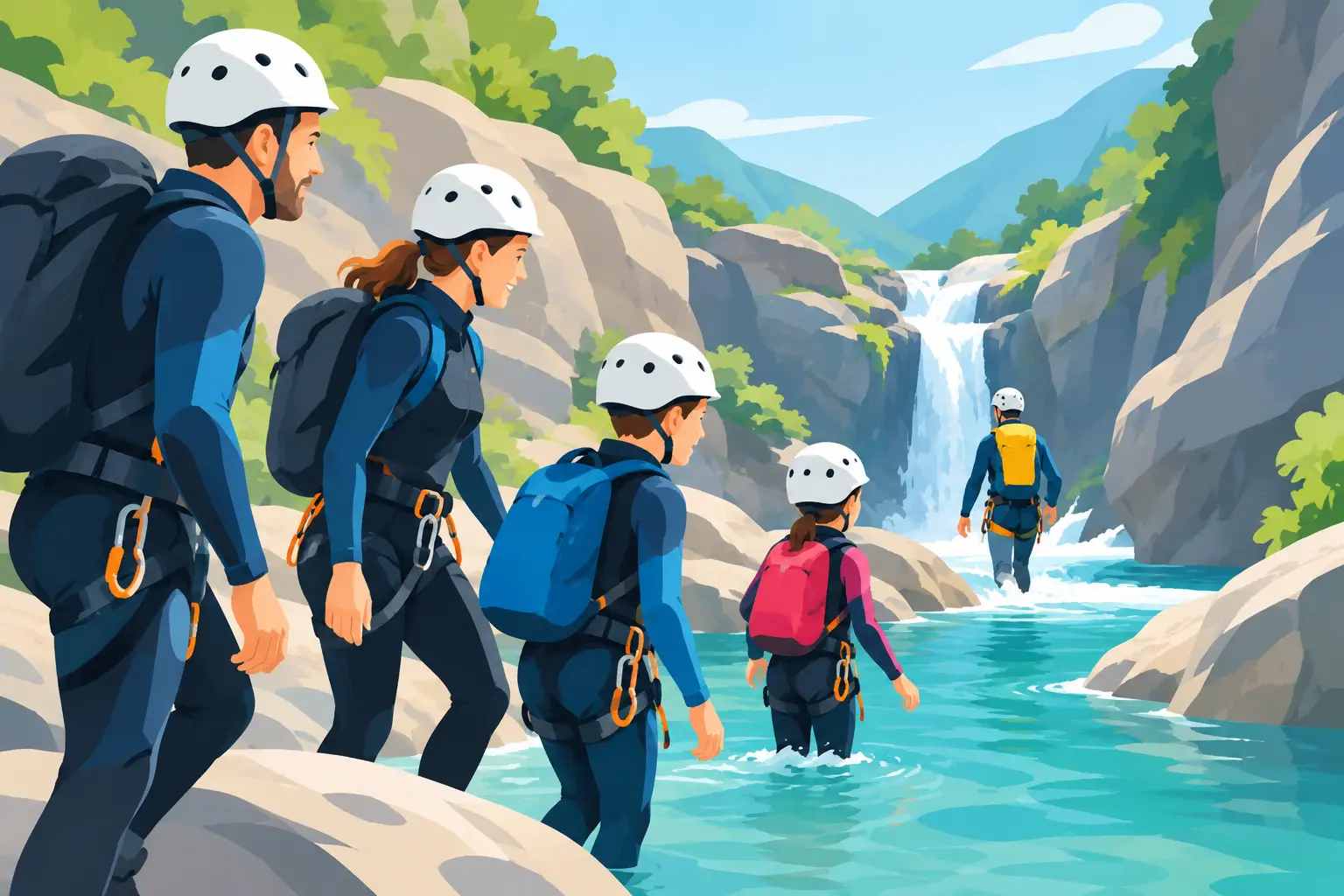
A 13-year-old who loves scrambling, swimming and trying new things may be better prepared for a canyon than an anxious adult. That is why canyoning age limits matter, but they are never the whole story. A good guided trip looks at the participant, the route and the conditions together – then makes sure everyone is on an adventure that feels exciting rather than overwhelming.
For families, friends planning a big birthday, and groups travelling with teenagers, getting this right means more than ticking off a minimum age. It means choosing a day where every person can enjoy the waterfalls, rainforest pools, rock slides and abseils with the confidence to get properly stuck in.
What canyoning age limits are really based on
Minimum ages are set for a reason. Canyoning takes place in a moving environment: wet rock can be slippery, water levels can change and some routes involve uneven walking, climbing, floating, jumping or descending on ropes. A younger participant needs enough physical coordination, attention and emotional readiness to follow instructions when it counts.
The published age limit for a specific trip is the starting point. Treat it as firm, not as a target to negotiate around. If a trip is designed for participants aged 12 and over, for example, that does not mean every 12-year-old will enjoy it equally, and it does not mean an 11-year-old should be squeezed in because they are nearly there.
Guides also consider practical factors that a birthday alone cannot show. Can the person listen carefully during a safety briefing? Are they comfortable getting their face wet? Will they cope with cooler water and a few hours of physical activity? Can they stay with the group and speak up if they are worried? These answers help match people to the right experience.
Age requirements can also differ between operators, routes and seasons. A calm introductory canyon and a full-day rainforest mission with bigger abseils should not have identical expectations. Always check the age rule attached to the exact departure you want, rather than relying on a friend’s past trip or a general online answer.
Choosing a trip for younger canyoners
For a first canyoning experience, shorter is often smarter. A half-day trip gives younger teens and cautious adults time to learn the basics, get used to the water and discover whether they enjoy the mix of scrambling, swimming and rope work. It still delivers the good stuff – hidden pools, waterfalls and that brilliant feeling of travelling through terrain you could never reach on an ordinary bush walk.
A full-day canyoning trip is a bigger commitment. There is more time in the canyon, more physical work and often more technical features. For a fit, adventurous teenager who has already shown they enjoy outdoor challenges, that can be exactly the point. For someone who is uncertain around heights or gets tired quickly, a shorter route may create a much better memory.
Night canyoning adds another layer. Glowworms and a torch-lit rainforest make it a proper story to tell afterwards, but darkness changes how people judge distance, balance and unfamiliar sounds. It suits participants who are happy in the water, comfortable following close guidance and keen for something outside the usual daytime adventure. It may not be the best first choice for a child who is already nervous about the dark.
The goal is not to find the toughest trip a young person is technically allowed to join. It is to find the trip that leaves them buzzing, proud and ready to come back for more.
Confidence matters more than bravado
Parents and organisers sometimes worry that a quieter child will hold the group back. Usually, the opposite can be true. A young person who listens, asks questions and takes each stage at their own pace is often brilliantly suited to guided canyoning.
Bravado is less useful than cooperation. The canyon is a team environment: people wait their turn, encourage each other, check that everyone is comfortable and follow the guide’s instructions. No one earns extra points for pretending they are not nervous at the top of an abseil.
A good guide will explain each technique before it happens, demonstrate what to do and coach participants through it. There is no need for previous canyoning experience. What helps is a willingness to have a go, accept guidance and keep a sense of humour when the first splash of cold water hits.
Questions to ask before booking
Before booking for a child, teenager or mixed-age family group, ask the operator about the particular trip rather than simply asking whether canyoning is “safe for kids”. That question is too broad to be useful. Be specific about ages, swimming confidence, any medical considerations and what kind of challenge your group enjoys.
It is worth confirming whether every young participant must be accompanied by a parent or legal guardian, or whether another responsible adult can supervise them. Ask how much swimming is involved, whether jumps are optional, the likely total time on the move and what happens if weather conditions change. Professional operators monitor conditions and may alter plans or cancel when the canyon is not suitable. That is sound decision-making, not a disappointing extra.
You should also be honest about confidence around heights. An abseil is controlled and guided, but it is still a real descent beside a waterfall, not a theme-park version of one. Knowing this in advance lets the guide advise on the most suitable experience and lets the participant arrive prepared rather than surprised.
Getting children and teens ready for the canyon
You do not need to enrol the family in a boot camp before a guided trip. Most newcomers arrive without specialist skills or personal equipment. Guides provide the technical gear and show the group how to use it safely.
A little preparation makes the day smoother, though. Encourage younger participants to practise swimming in a pool if they are rusty, wear the footwear specified by the operator and eat a decent meal before setting off. Bring any personal items requested in the trip information, and leave valuables behind unless there is a clear plan to keep them dry.
Talk through the day in straightforward terms. Explain that there may be a walk into the rainforest, that everyone will wear a wetsuit and helmet, and that they may need to climb over rocks or step into deep water. Avoid overselling it as either terrifying or effortless. The best message is simple: it will be challenging in places, the guides know exactly what they are doing, and the group will tackle it one stage at a time.
For teenagers, let them own part of the decision. Show them the trip description and ask what sounds fun and what gives them pause. They are more likely to enjoy the experience when they have chosen the challenge rather than been volunteered for it by enthusiastic adults.
Canyoning age limits for adult groups
Age limits are often discussed as a question about children, but adults should not treat them as irrelevant. Being over the minimum age does not automatically make a person ready for every route. Fitness, mobility, swimming ability and confidence are still part of the picture, whether you are 18, 38 or 68.
That is good news for mixed groups. A fit grandparent, a first-time traveller and a sport-loving teenager can all have a fantastic day if the route is chosen for the group’s actual capabilities. The best group organiser does not book the biggest possible challenge by default. They choose the one that gets the whole crew laughing, cheering and swapping photos afterwards.
This matters for stag and hen groups too. Canyoning is awesome fun, but it is not the place for anyone to arrive exhausted, dehydrated or keen to ignore instructions. Save the big night out for after the canyon. Show up ready to move, listen and look after your mates.
A challenge worth choosing well
At AWOL Canyoning Adventures, the rainforest near Piha makes an extraordinary setting for a first big outdoor challenge: waterfall descents, narrow passages, native bush and the kind of mud-on-your-knees moments that bring a group together fast. The right age limit and trip choice help keep that challenge positive from the first briefing to the last high five.
If you are unsure whether a younger participant is ready, do not guess. Share their age, confidence and experience with the operator before you book. The best adventure is not the one that sounds most extreme on paper – it is the one where everyone steps into the canyon feeling prepared, supported and genuinely excited for the next waterfall.