
Waitakere Canyoning Guide for First-Time Adventurers

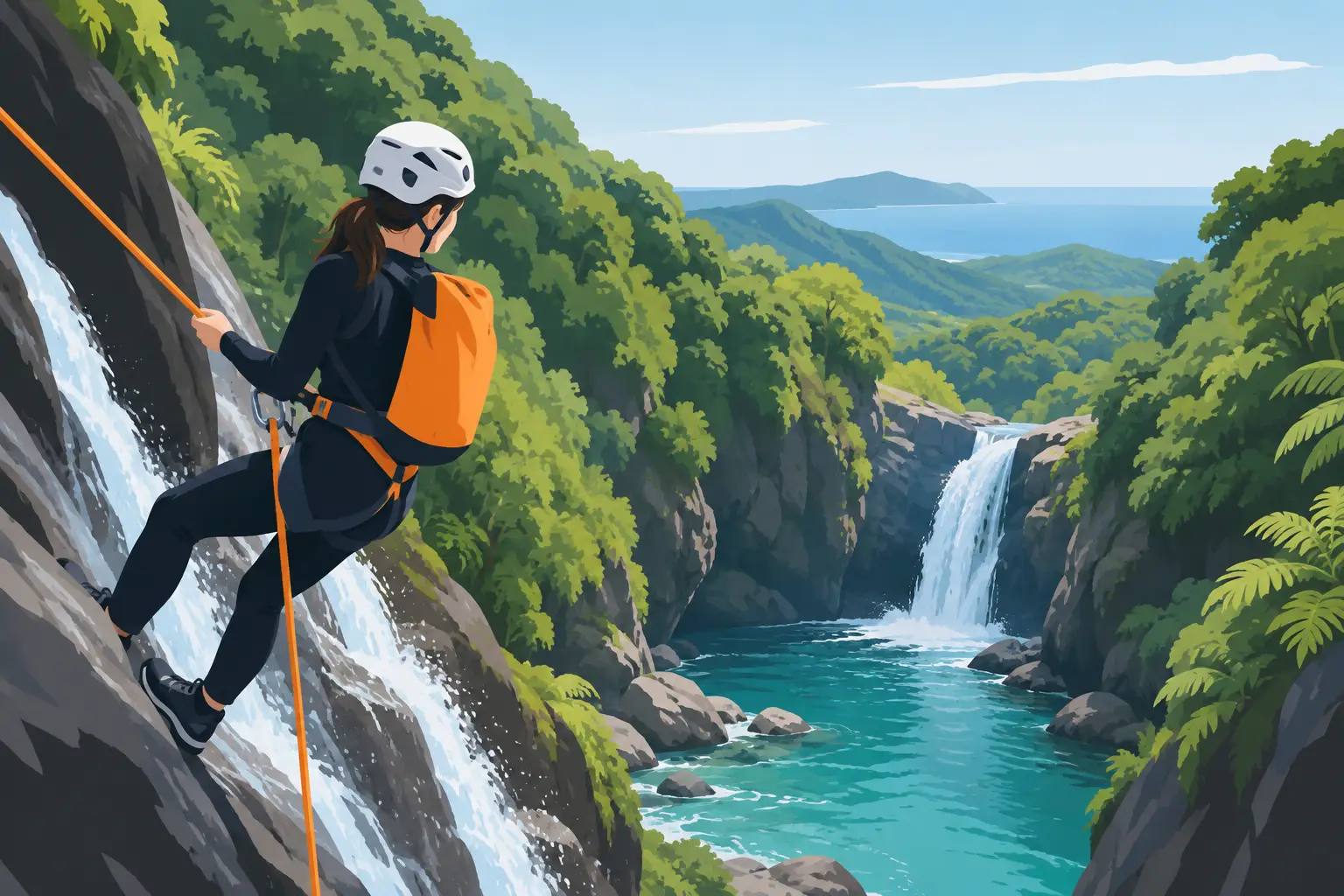
The first step backwards over a rainforest waterfall is the moment most people remember. Your feet find the rock, the rope takes your weight and the view opens into a steep, green gorge below. This Waitakere canyoning guide is for anyone who wants that feeling without needing previous rope skills, a garage full of gear or years of outdoor experience.
Canyoning is not a bush walk with a splash at the end. You move through a live watercourse using a mix of abseils, slides, swims, scrambles, jumps and short walks through the forest. It is physical, wet and brilliantly social. Around Piha, it also puts you right inside the kind of subtropical scenery that feels a world away from central Auckland.
What makes Waitākere canyoning different?
The Waitākere Ranges bring the drama. Thick native rainforest grows right to the edges of narrow gorges, waterfalls drop through dark volcanic rock and the sound of the city disappears quickly. The coast is close, but once you are in the canyon, the day is about cool water, mossy walls and working out the next move with your group.
That environment is exactly why guided canyoning makes sense. Conditions can change after rain, rock can be slippery and rope systems need to be set up correctly. A professional guide reads the canyon, runs the technical side and teaches you what to do before each obstacle. You still do the abseil, take the jump or make the scramble. You simply have the right support behind you.
There is a proper sense of achievement in it. You are not watching an adventure from a lookout or ticking off a viewpoint. You are moving through the landscape one waterfall at a time.
Your Waitakere canyoning guide to choosing a trip
The best trip is not automatically the longest or toughest one. It depends on how much time you have, how comfortable you are in water and whether your group is after a big challenge, a first taste of canyoning or something completely different after dark.
Full-day canyoning for the big hit
A full-day trip is the one to choose when you want the full rainforest mission. Expect major abseils, waterfalls, narrow gorge sections, caves, jumps and plenty of time in the water. It is a full-body day, but the pace is managed by guides and the skills are taught as you go.
This option suits active travellers, groups celebrating something properly and locals who want an Auckland adventure that does not feel like a standard weekend plan. The biggest abseils can look intimidating from above. That is part of the buzz. With clear instruction, a harness and helmet, and a guide controlling the system, newcomers can step up with confidence.
Half-day canyoning for a strong introduction
A half-day trip is ideal if you are short on time, travelling with people of mixed confidence or testing whether canyoning is your kind of fun. You still get wet, learn the basics and experience the gorge, but with a shorter commitment and a more approachable pace.
It is a smart choice for first-timers who are excited but unsure how they will feel on a rope. It also works well as a high-energy addition to a wider Auckland itinerary. You do not need to spend days preparing for it. Turn up ready to move, listen to your guide and be prepared to laugh when the water finds its way into your wetsuit.
Night canyoning for glowworms and a different kind of wild
After dark, the rainforest changes character. Head-torches pick out wet rock and hanging ferns, while glowworms bring small points of light to the canyon walls. Night canyoning has the same hands-on adventure feel, but the atmosphere is quieter, stranger and seriously memorable.
This is a great pick for couples, friend groups and visitors who want a story beyond the usual dinner-and-drinks plan. You do not need to be an experienced outdoor person, but you do need to be comfortable following instructions closely when visibility is limited.
What the day actually feels like
Before entering the canyon, your guides run through the equipment and the key techniques. You will learn how to wear and use your harness and helmet, how an abseil works, where to put your feet and how to communicate around water and rope systems. Ask questions. Good guides expect them, especially before your first descent.
Then the movement begins. One minute you might be edging towards the lip of a waterfall; the next, wading through waist-deep water beneath rainforest walls. Some sections are active and fast-moving, others give you time to take in the scenery and cheer on the rest of the crew.
No two people approach a first abseil in exactly the same way. Some are ready to go immediately. Others need a breath, another explanation and a bit of encouragement. Both are completely normal. The aim is not to pretend you are fearless. It is to have a crack with a trained team looking after the technical details.
AWOL Canyoning Adventures builds that support into every guided experience, supplying the specialist kit and instruction so the focus stays where it should be: on having awesome fun in the canyon.
Do you need to be super fit?
No. You do need a reasonable level of mobility and the willingness to be active for the length of your chosen trip. Canyoning involves walking on uneven ground, stepping over rocks, climbing short sections and spending time in cool water. A full day naturally asks more of you than a half day.
Swimming confidence helps, but it is not the same as needing to be a fast swimmer. Buoyancy from a wetsuit and close guide supervision make a real difference. Be honest about your confidence in water, any injuries and health considerations before booking. The right trip may be a gentler introduction rather than the biggest possible challenge.
For groups, choose the experience based on the least confident person, not the loudest one. A trip everyone can enjoy beats a day where someone feels pushed beyond their limits. That is especially true for family groups, hens and stags, and workplace teams with a wide range of fitness levels.
What to bring and what gets provided
Guided canyoning removes the expensive, technical barriers. Specialist equipment is provided, including the gear needed for abseiling and protection in the canyon. You will be told what is included for your specific trip and what you need to bring yourself.
Your personal kit should be simple and practical:
- Swimwear to wear under your canyoning gear.
- A towel and dry clothes for afterwards.
- Any personal medication you may need during the day.
- A secure way to manage glasses if you wear them.
- A positive attitude to getting completely wet.
Leave jewellery and valuables behind where possible. Canyons are brilliant places for memories, but not for loose belongings. If you bring a camera, make sure it is genuinely waterproof and securely attached. Your guide can also advise when it is sensible to take photos and when it is time to keep both hands free.
Respect the rainforest while you play in it
The Waitākere Ranges are not an adventure playground detached from nature. They are a precious, living forest with sensitive tracks and waterways. Follow all footwear-cleaning requirements, stay with your group and stick to the access instructions given on the day. Those small actions help protect the forest for the next crew.
Guides also bring the place to life. Between the waterfalls and the adrenaline, there is time to notice the forest around you, hear about local heritage and understand why this landscape deserves care. That contrast is part of what makes canyoning here special: one moment you are buzzing from an abseil, the next you are standing quietly beneath towering native bush.
If you are choosing between a day at the beach and a day in the canyon, think about the story you want to take home. Sand washes out of your shoes. The moment you step backwards over that first waterfall tends to stay with you.