
How to Choose Canyoning Difficulty for Your Trip

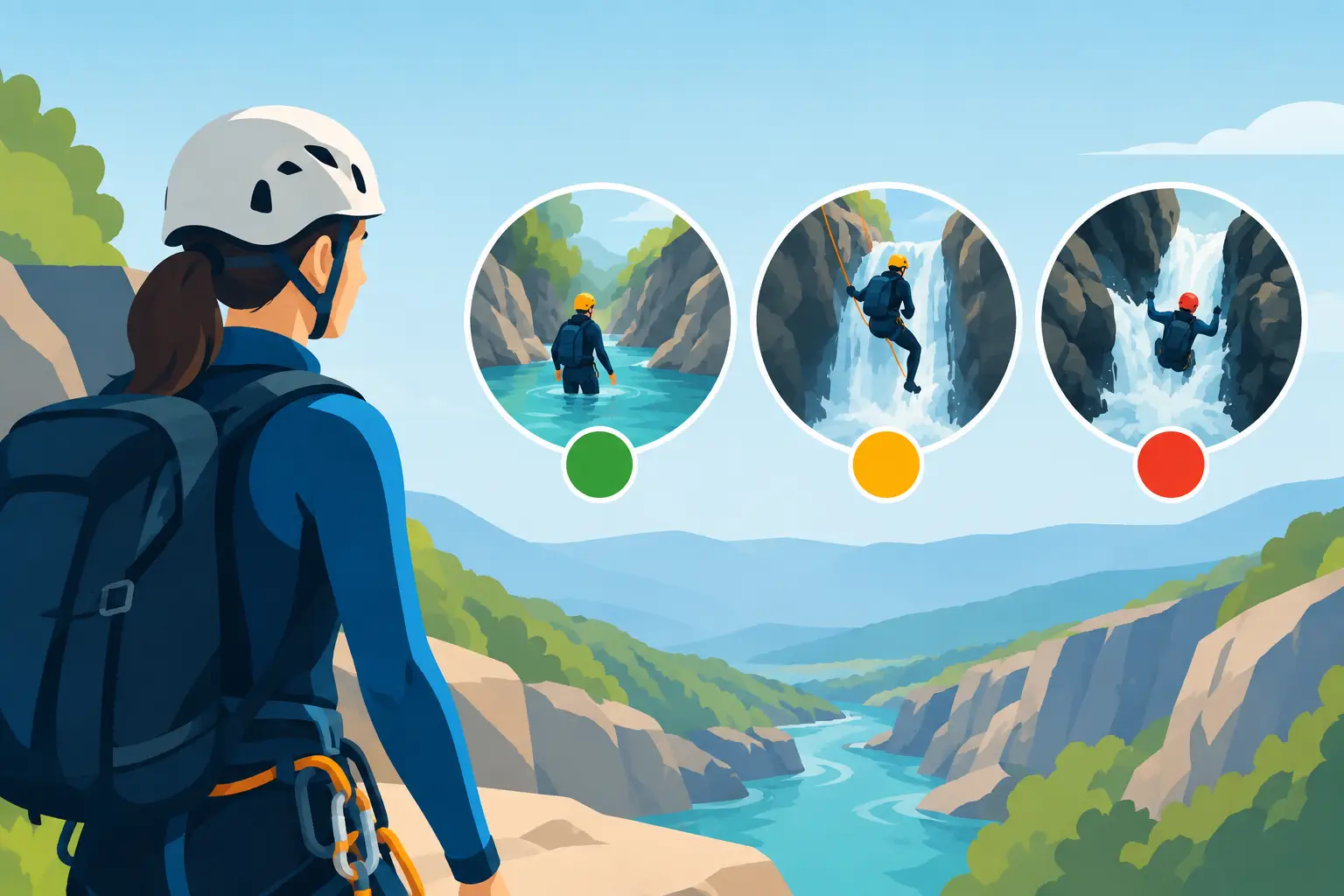
A huge waterfall can look intimidating from the canyon floor. Then you clip into the rope, take a breath, lean back and discover why so many first-timers come out grinning. Knowing how to choose canyoning difficulty is not about proving you are the toughest person in your group. It is about picking the trip that gives you a proper challenge while leaving enough headspace to enjoy the jumps, rainforest, rock pools and big views.
Canyoning difficulty is rarely a simple beginner, intermediate or advanced label. A short route can feel demanding if it is cold, wet and full of scrambling. A longer trip with a big abseil can be a brilliant first experience when guides provide clear training, quality gear and a steady progression into the action. Start with an honest look at your comfort level, then match it to the trip rather than the photo.
How to choose canyoning difficulty honestly
The best choice sits where excitement meets capability. You should expect to feel a few nerves – that is part of the fun – but you should not spend the whole day dreading the next obstacle. Think about four things: your general fitness, confidence around water, comfort with heights, and appetite for a full-on day outdoors.
Fitness does not mean you need to be a gym regular or an experienced climber. Canyoning usually involves walking on uneven tracks, scrambling over wet rocks, wading through water and staying active for several hours. If you can handle a decent bush walk, move carefully over rough ground and keep going when you are damp and tired, you are likely ready for an introductory guided canyon.
Be realistic about any knee, shoulder, ankle or back issue. Abseiling is controlled and supported by your guide, but getting around a canyon still asks plenty of your body. Tell the operator before booking rather than hoping it will be fine on the day. A good guide team would always rather help you choose a suitable option than have you push through discomfort.
Water confidence matters too. You do not need to be an elite swimmer to enjoy a guided canyoning trip, but you need to stay calm in moving water, follow instructions and be comfortable getting fully wet. Wetsuits and buoyancy equipment change how the water feels, while guides explain exactly where to enter, float, swim or climb out. If water makes you anxious, a shorter daytime trip is often a better starting point than an all-day mission.
Heights deserve an equally honest answer. There is a difference between saying, “I do not love looking down”, and freezing when you reach an edge. Many people who are nervous about heights enjoy abseiling because they are secured, coached and focused on the next small movement. Still, if you know exposure causes panic, choose a route with smaller abseils first. You can always come back for Auckland’s bigger descents once you know you love the sport.
Read the trip, not just the difficulty label
Two trips described as adventurous may deliver very different days. Read the actual itinerary and look for the activities involved, the time spent in the canyon and the physical commitment before and after the main action.
A half-day introductory experience is usually the smart call if you are new to canyoning, travelling with mixed-confidence mates or fitting adventure around a packed Auckland visit. You still get the essential buzz: wet rock, flowing water, technical gear and guided descents. The shorter duration makes it easier to concentrate, particularly if you are unsure how you will feel in a wetsuit or on slippery terrain.
A full-day canyoning trip suits people who want the complete rainforest mission. Expect more time on foot, more obstacles and a bigger sense of journey as the gorge closes in around you. Major abseils, waterfalls, jumps and caves can all be part of the experience. It is the better choice for active people who want to earn the best bits, but it is not automatically the right choice just because you are fit. You also need to enjoy being wet, active and outside for the duration.
Night canyoning adds another layer. A gorge that feels familiar in daylight becomes more atmospheric after dark, especially when glowworms appear against the rock walls. This is less about being physically harder and more about being comfortable with limited visibility, unfamiliar terrain and a stronger sense of adventure. If you are excited by that rather than unsettled by it, it can be a cracking choice.
Separate the challenge into its parts
The word “difficult” can hide what you are actually worried about. Ask yourself which part of canyoning gives you pause. Is it the height of an abseil, the idea of jumping, the walk in, the cold water, or simply not knowing what to do with the ropes?
Technical experience is the easiest concern to solve on a guided trip. Beginners are taught the essential skills, shown how the equipment works and given instructions at each feature. You do not need to arrive knowing knots, rope systems or canyon signals. The point is to learn as you go while trained guides manage the technical side.
The physical side is more individual. A big abseil may look wild but can be less exhausting than a long, uneven walk. Jumps are often optional or have an alternative route, but never assume that without asking. Likewise, the depth and pace of water can change after rain, which means guides may alter a route or activity to suit conditions. That is sound judgement, not a watered-down adventure.
Weather is part of the deal in a rainforest canyon. You will get wet, and that is the point. But cold, heavy rain and changing water levels affect how strenuous a day feels. Dress for the trip as instructed, eat beforehand and bring the right post-canyon layers for the journey home. Being warm, fed and prepared makes a bigger difference to confidence than most people expect.
Choose for the least confident person in your group
Friends often book canyoning because they want a shared story, not because everyone has identical nerves. The best group choice gives the most hesitant person a chance to feel supported without leaving the keenest person bored.
Talk openly before you book. One mate may be happy with heights but hate cold water; another may love swimming but be wary of a long hike. Families, hens, stags and work teams work best when everyone understands the level of commitment. Booking a slightly more accessible trip can produce more laughs and better photos than dragging a nervous friend onto a route they are not ready for.
For a corporate or school group, difficulty is also about attention and teamwork. A manageable physical challenge gives people room to communicate, encourage each other and notice the environment. If the route is beyond several participants, the day becomes about getting through it rather than sharing it.
Ask the questions that make booking easier
You do not need to guess whether a trip is for you. Before committing, ask how long you will be active, whether there are significant walks or climbs, what the largest abseil involves, and whether jumps have alternatives. Mention your swimming confidence, any relevant injuries, and whether this is your first time in technical outdoor gear.
Also ask what is included. An organised guided experience should make the practical side straightforward, with instruction and essential canyoning equipment supplied. Optional transport can be especially useful if you are visiting Auckland or would rather finish the day tired, happy and not thinking about the drive.
At AWOL Canyoning Adventures, the goal is not to make newcomers feel like experts before they arrive. It is to give them the coaching, equipment and encouragement to tackle real rainforest terrain with confidence. That is a very different proposition from trying to judge a canyon alone from a dramatic social post.
Let your first trip build confidence
There is no prize for choosing the most intense option first. Choose the trip that makes you think, “That looks a little scary, but I want to do it.” That is usually the sweet spot.
Once you have felt the first rush of stepping backwards over a waterfall, negotiated a narrow gorge and laughed your way through a cold pool, your idea of difficult may shift quickly. Start at the level that lets you be present for every awesome moment, then save the next big canyon challenge for when you are already asking, “When can we go again?”