
Full Day Versus Short Canyoning – Which Fits?

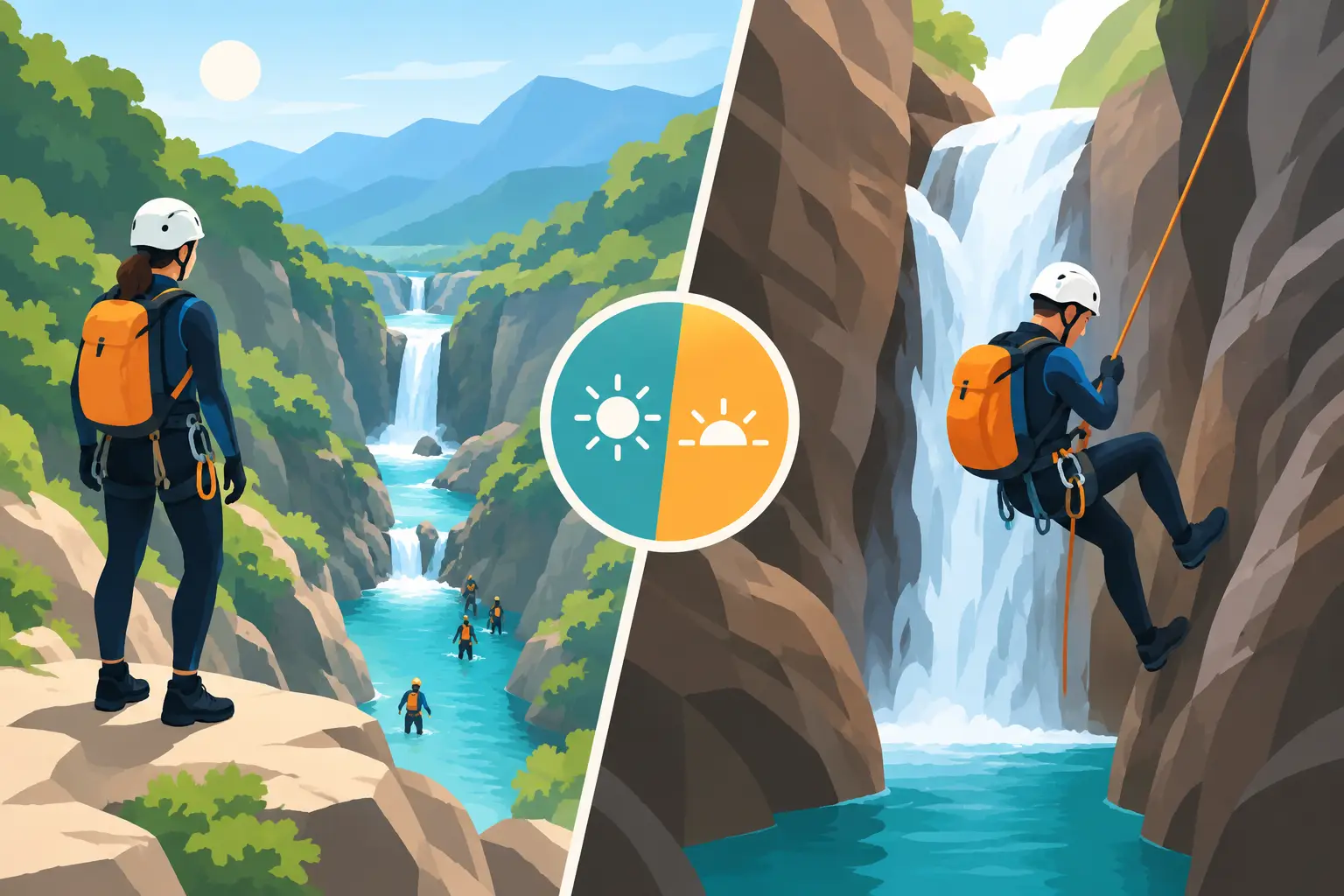
You are standing at the top of a waterfall, clipped to a rope, with a rainforest gorge dropping away below your boots. The real question behind full day versus short canyoning is not whether either trip will be exciting. It will. The choice is whether you want a brilliant first taste of the canyon or a full-throttle day of abseils, jumps, waterfalls and wild Waitākere scenery.
Both options are guided, social and made for people who do not own technical gear or already know how to abseil. Your guides teach the skills, provide the equipment and get the group moving with confidence. What changes is the scale of the adventure, the amount of time you spend in the gorge and how much challenge you want packed into your day.
Short canyoning: big fun in a smaller window
A short canyoning trip is built for people who want action without giving over their entire day. You will still get wet, scramble through the bush, tackle waterfalls and learn the basic rope skills that make canyoning so satisfying. This is not a sightseeing walk where you stand back and watch. You are in the canyon, taking part from the start.
It is a strong choice for first-timers who are curious about canyoning but unsure how they will feel on ropes. Once you have had a guide talk you through your first descent, most nerves turn into huge grins. A shorter format gives you that achievement without the physical build-up of a longer day.
It also works well when Auckland is only one stop on a busy holiday. Perhaps you have a coastal walk planned, a late lunch in Piha, or friends arriving later in the day. A shorter trip leaves room around the adventure while still delivering the proper rainforest experience.
For local groups, the appeal is simple: get out of the city, do something far more memorable than the usual brunch, then get on with the rest of your plans. Birthdays, hens, stags and mates looking for an awesome challenge often find the short trip hits the sweet spot.
Who should choose a short trip?
Choose short canyoning if you are new to outdoor adventure, have limited time, are travelling with people of mixed confidence, or simply want an energetic introduction before committing to a bigger canyon day. You do not need to be a gym regular, but you should be comfortable moving over uneven ground, getting wet and listening closely to instructions.
The trade-off is straightforward. A shorter trip means fewer hours in the gorge and less time for the larger, more sustained features that make a full day feel like a true expedition. You will finish wanting more – which is not the worst problem to have.
Full day versus short canyoning: the real difference
A full day canyoning trip is for people who see one waterfall and immediately want to know what is around the next bend. It gives the day room to build. There is more terrain to cover, more time in the water, more technical movement and more opportunity for the canyon to feel properly remote, even though it is close to Auckland.
Expect the features people talk about afterwards: major abseils, narrow gorges, waterfall descents, jumps where conditions allow, caves and thick subtropical rainforest. The biggest difference is not only that the abseils are higher. It is the feeling of spending a whole day travelling through a landscape that cannot be reached by an ordinary bush walk.
A full day has a satisfying rhythm. You begin by learning the system and settling into your gear. Then the group finds its flow: helping each other over rocks, cheering the first big descent, sharing snacks and laughing at the moments when everyone gets properly soaked. By the end, you have earned that tired, happy feeling that comes from doing something genuinely physical and completely different.
This option suits active visitors who want one standout Auckland adventure rather than several smaller activities. It is also a cracking pick for friends who want a shared story, corporate teams looking to replace boardroom small talk with real teamwork, and confident beginners ready to push beyond their usual comfort zone.
The trade-off is that a full day asks more of you. You will be outdoors for longer, on your feet for longer and working through more varied terrain. You do not need previous canyoning experience, but arrive ready to participate, follow your guide and embrace a proper adventure day.
Do not choose by fitness alone
People often assume the full-day option is only for ultra-fit thrill-seekers. That is not quite right. Fitness helps, particularly with walking, scrambling and maintaining energy through the day, but attitude matters just as much. A calm listener who is willing to try can often thrive on a full day, even if they have never worn a wetsuit or clipped into an abseil rope before.
Equally, a very fit person may prefer a shorter trip if they dislike heights, have a tight schedule or are travelling with someone less confident. There is no prize for booking the longest experience if it does not suit the group.
Think honestly about the following: how much time you have, how you feel about heights, whether you enjoy being wet and active for several hours, and what you want to remember most. If the answer is “I want to test myself on Auckland’s biggest abseils”, go full day. If it is “I want an exciting, guided first go and still have time for other plans”, short canyoning makes perfect sense.
What stays the same on both trips
Whichever format you choose, canyoning is not about being dropped into the bush and left to figure it out. AWOL Canyoning Adventures supplies the specialist gear and the know-how, then teaches you what to do before each challenge. Your guide is there to manage the technical systems, set the pace and help you get the most from the terrain safely.
You should expect to get wet and muddy, wear a wetsuit and helmet, and be part of a group experience. Canyoning is naturally hands-on. You might be lowering yourself down a waterfall one minute, squeezing through a rocky section the next, then floating in a pool beneath the trees.
The rainforest setting is a major part of both trips. Slow down when there is a chance to look up. The Waitākere Ranges are not just a dramatic backdrop for a photo. The bush, streams and Piha-area heritage give the day its character, and responsible access matters. Follow your guides on cleaning procedures and track rules that help protect this special environment.
Booking for a group with mixed expectations
Groups can make this choice harder because one person wants maximum adrenaline while another has never abseiled before. Start by deciding what success looks like for everyone. If your priority is getting the whole group involved, laughing and feeling proud, a shorter trip can be the smart call. Nobody has to spend the morning worrying about whether they can keep up.
If your group is keen, active and has set aside the time, a full day creates stronger shared moments. Big descents demand encouragement. Longer journeys create space for the group to gel. That makes them particularly good for teams, friendship groups and celebration days where the experience itself is the main event.
Weather and water conditions can also shape the day. Canyons are living environments, not indoor attractions. Guides make decisions based on conditions, and a flexible attitude is part of the adventure. Bring the right energy rather than a fixed script for every moment.
Make the choice, then commit to it
Short canyoning is not the lesser option. It is a fast, fun and confidence-building way into an incredible sport. Full-day canyoning is not reserved for experts. It is the choice for beginners and adventurers alike who want more time, more challenge and more rainforest stories to take home.
If you are torn, ask yourself one final question: when the guide asks who is ready for the next waterfall, do you want the day to be winding down or only just getting started? Book the answer that makes you smile, pack a sense of humour and let the canyon do the rest.