
Canyoning Fitness Requirements Explained

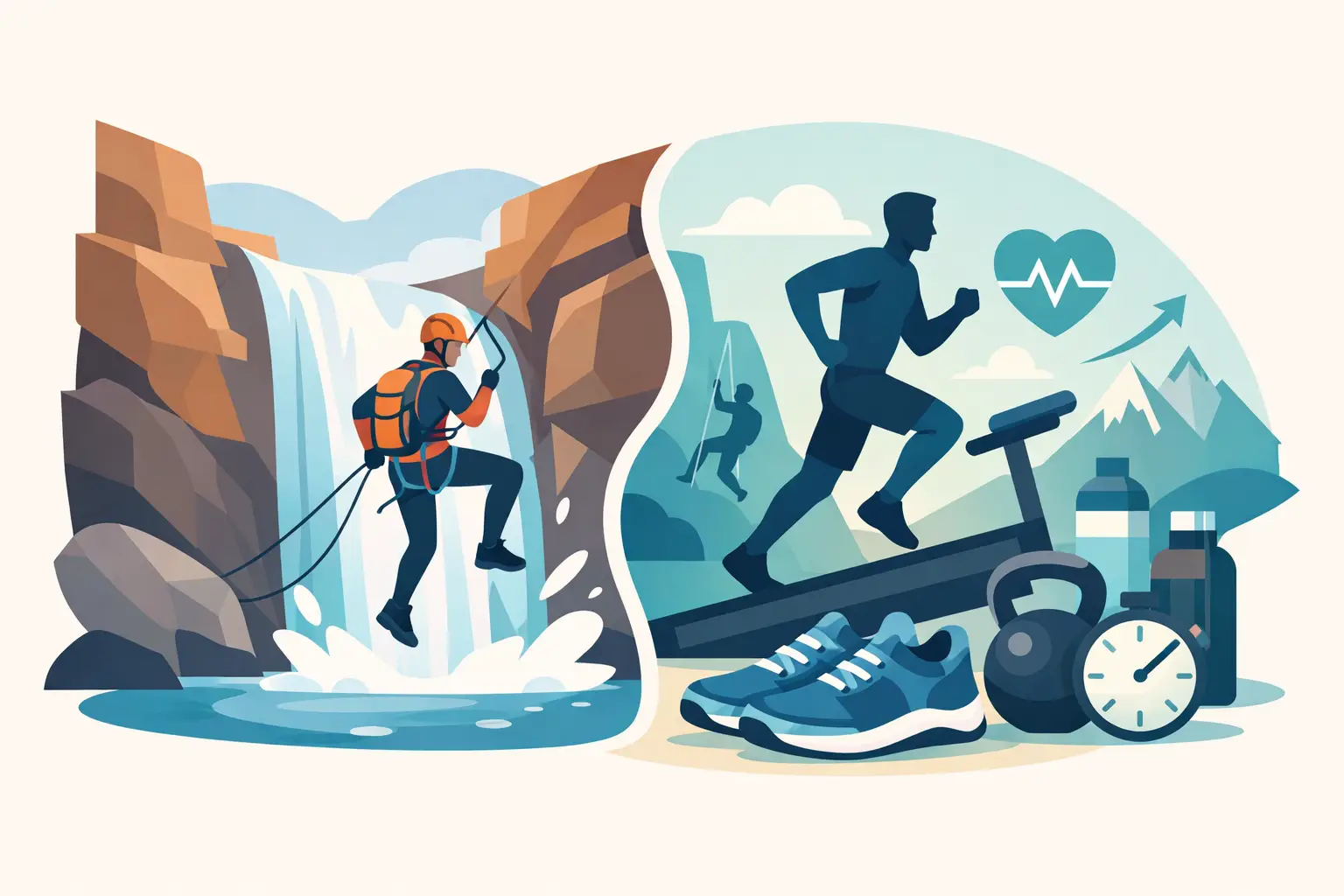
A big waterfall is not the place to find out you hate getting wet, heights make your knees wobble, or your legs are not up for a steep bush track. That said, canyoning fitness requirements are often less intimidating than people expect. You do not need to be a mountain athlete or arrive with technical rope skills. You do need to be ready to move for several hours, listen to your guide and get properly involved.
Canyoning is active, hands-on fun. Expect to walk through rainforest, scramble over wet rock, wade through pools, abseil beside waterfalls and, depending on the trip, jump into deep water. The challenge comes from combining those things in a wild setting, not from one single test of strength.
What fitness do you actually need for canyoning?
A reasonable base level of everyday fitness is the best starting point. If you can comfortably go for a long walk with hills, climb flights of stairs without needing a lengthy recovery and stay active for a few hours, you are likely building from the right place.
The full day is more demanding than a quick gym session. There can be uneven ground, slippery surfaces, water resistance and periods where you need to hold a stable position while your guide talks you through an abseil. You may feel your thighs on descents, your forearms while managing rope, and your core when moving through currents or awkward rocky sections.
That does not mean you need to train like an elite athlete. Good guided canyoning is built around clear instruction, the right equipment and a pace the group can manage safely. A first-timer who is generally active, willing to have a go and able to follow directions will usually get far more from the day than a super-fit person who rushes ahead and ignores the briefing.
Stamina matters more than speed
Canyoning is not a race. You will stop to learn techniques, take in the scenery, support other members of the group and enjoy the buzz after a big descent. But the total time on your feet adds up, especially on a full-day trip.
Think about sustained effort rather than sprint fitness. Can you walk on rough tracks for a few hours, sometimes uphill and sometimes carrying a little equipment? Can you keep your energy up after lunch rather than fading halfway through the afternoon? Those are more useful questions than how quickly you can run 5K.
If you have been mostly desk-bound lately, start with brisk walks three or four times a week. Add hills, steps or a local trail as your confidence grows. It is simple preparation, but it makes a real difference when the rainforest track gets steep and the canyon keeps delivering another brilliant obstacle.
Mobility and balance help on wet terrain
You do not need gymnast-level flexibility. You do need to be comfortable stepping over rocks, lowering yourself down short ledges and moving carefully on uneven surfaces. Canyons are naturally slippery, and the smartest move is often a slow, deliberate one.
Balance is useful because footing changes constantly. Water can hide the shape of the rock below, while narrow sections may ask you to brace with hands and feet. Guides will show you where to step and how to move efficiently, but strong ankles, mobile hips and a little body awareness make the experience feel smoother.
A few weeks of basic preparation is plenty for many people: bodyweight squats, step-ups, calf raises, lunges and gentle single-leg balance work. Keep it controlled rather than heroic. The aim is to arrive feeling capable, not sore from an ambitious last-minute workout.
Upper-body strength is useful, not the main event
People often picture canyoning as hanging from ropes all day. In reality, your harness and the rope system do much of the work during an abseil. You will be trained to use the equipment correctly, and you will not be expected to muscle your way down a waterfall.
Still, some upper-body and grip strength helps with scrambling, holding a handline, stabilising yourself in moving water and carrying your share of the day. Exercises such as rows, assisted hangs, presses and farmer’s carries are useful if you already train. If you do not, do not panic. Everyday strength plus good technique goes a long way.
Swimming confidence and water comfort
You may not need to be a powerful lap swimmer, but being calm in water is a major advantage. Canyoning can involve swimming, floating, wading and entering pools after a jump or slide. A wetsuit provides buoyancy and warmth, while guides explain exactly what is coming up, but you still need to stay composed and respond to instructions.
Be honest about your swimming ability when booking. There is a big difference between being a little rusty and being genuinely distressed when you cannot touch the bottom. A suitable trip may still be possible, but the operator needs the full picture to advise you properly.
Water confidence can be built before your trip. Spend time in a pool wearing normal swim gear, practise floating on your back and get used to putting your face in the water. The goal is not a perfect front crawl. It is knowing that you can breathe, float and stay calm if the water feels cold or unfamiliar.
Heights, jumps and the confidence factor
Fitness is only half the story. Canyoning asks for a willing mindset too. Standing at the top of an abseil or looking into a dark pool can make even strong, sporty people pause. That is completely normal.
You do not need to be fearless. You need to be prepared to listen, take one step at a time and tell your guide if you are nervous. The best guides break the process down clearly: how the harness works, where your hands go, where to look and what happens next. Once you start moving, confidence often catches up quickly.
Jumps are not about showing off. Technique, landing position and the guide’s call matter far more than bravado. Never assume every jump is compulsory or that you should copy the person ahead of you. Conditions, trip format and individual comfort all matter. Ask questions early, and choose the option that lets you enjoy the challenge rather than simply endure it.
Match the trip to your current fitness
A shorter introductory canyoning session is a great call if you want the buzz of waterfalls and abseils without committing to a full day of physical effort. It lets you test how you feel in the harness, in the water and on rainforest terrain. For mixed-ability friend groups, families or visitors with a packed Auckland itinerary, that can be the sweet spot.
A full-day canyoning adventure suits people who want more time in the gorge and are happy with a bigger physical day. You should expect a longer approach, more sustained movement and a satisfying level of tiredness at the end. If you enjoy hiking, adventure activities or active holidays, it is likely your kind of day.
Night canyoning brings a different challenge. Moving through the bush after dark demands attention and comfort with limited visibility, even when your guide provides the gear and direction. The reward is something special: the rainforest feels quieter, wilder and completely different under the glow of glowworms.
When to pause and seek advice
Being active is not the same as being invincible. Recent injuries, unstable knees or shoulders, significant back pain, heart conditions, severe asthma, pregnancy, epilepsy, or anything that could affect balance, breathing or consciousness deserve a proper conversation before booking. Your GP is the right person for medical advice, while the canyoning team can explain the practical demands of a specific trip.
Do not hide a concern because you do not want to let your group down. A good adventure starts with the right fit for everyone. Sometimes that means choosing a shorter trip, allowing extra recovery time after an injury or saving the big waterfall day for later.
A simple two-week preparation plan
If your trip is coming up soon, keep preparation realistic. Go for three brisk walks each week, ideally with some hills. On two of those days, add 10 to 15 minutes of squats, step-ups, lunges, calf raises and gentle core work. Spend one session in a pool if water confidence is the area you most want to improve.
In the final few days, prioritise sleep, hydration and comfortable movement over hard training. Arrive well-fed, ready to get wet and wearing the attitude that makes canyoning brilliant: give it a go, look after your mates and enjoy every wild bit of the journey.
The rainforest does not care what your gym numbers are. Turn up with a decent base, an honest sense of your limits and a readiness for awesome fun, and the canyon can do the rest.