
Guided Canyoning Versus Solo Trips: Choose Well

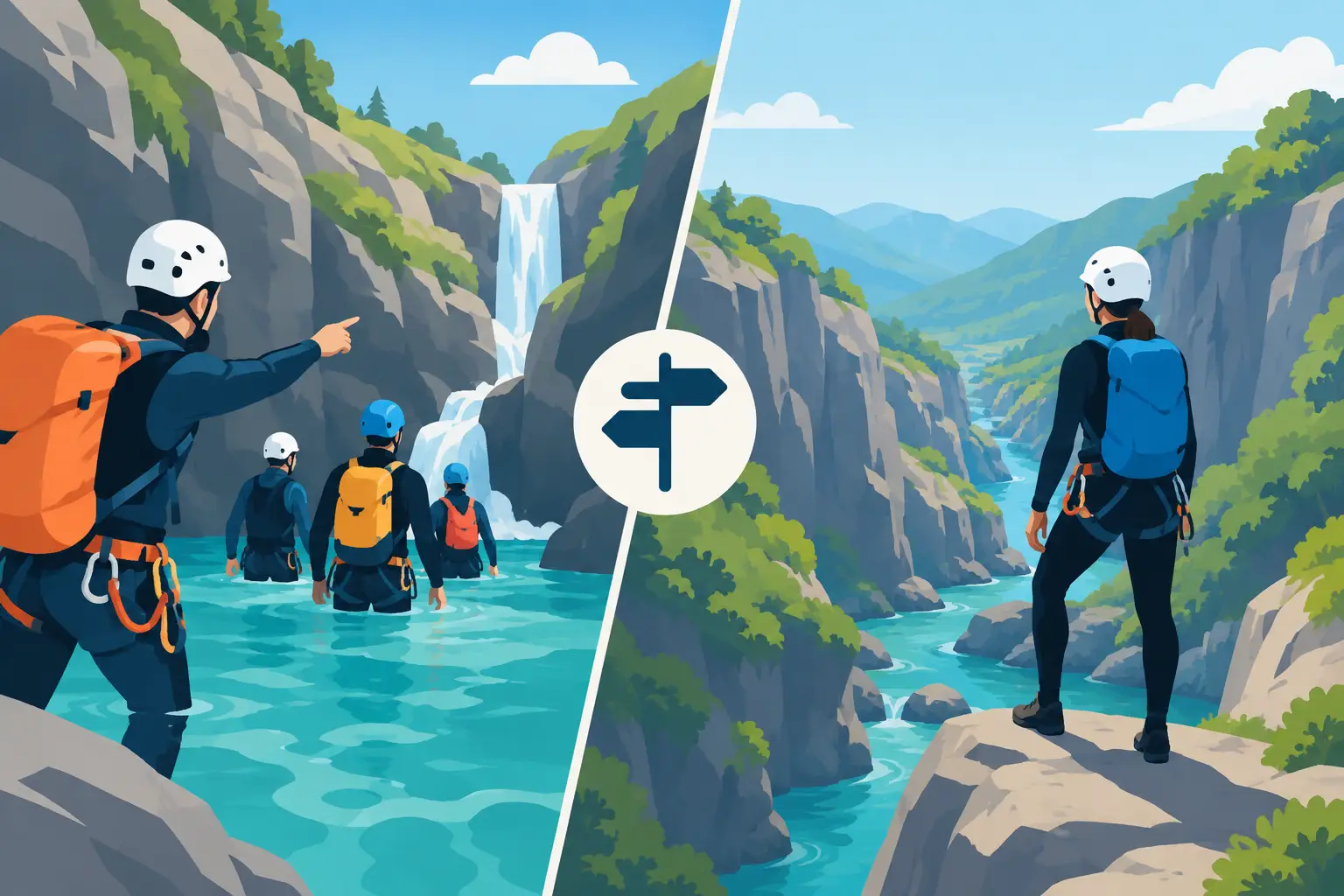
The decision between guided canyoning versus solo trips becomes very real when you are standing above a waterfall, clipped to a rope, with rainforest walls closing in around you. Canyoning is not a marked bush walk where you can simply turn around when the weather changes. It is a moving-water environment involving slippery rock, drops, pools, rope systems and decisions that can become serious quickly.
That does not mean every canyon adventure needs to feel intimidating. It means choosing the right format for your experience, the conditions and what you want from the day. For plenty of people, a guided trip is the fastest route to big abseils, jumps and hidden gorges without spending years building technical knowledge. For a genuinely experienced team, a private trip can offer a different kind of challenge – but it also carries the full weight of planning and judgment.
Guided canyoning versus solo trips: the real difference
The biggest difference is not whether one option is adventurous and the other is not. Both can be full of adrenaline. The difference is who is responsible for making safe, informed calls from the moment the trip is planned until everyone is back out of the canyon.
On a guided canyoning trip, trained guides assess the route, forecast, water levels and group ability. They set up and check rope systems, teach you how to abseil, manage the pace, and know the exit options if conditions change. You still do the exciting part: lowering yourself beside a waterfall, swimming through a dark pool, squeezing through a gorge and stepping into places most visitors never see. You are simply not expected to arrive already knowing how to run the technical side.
On a solo trip – usually meaning an independent trip with your own mates rather than literally alone – your group takes on every one of those responsibilities. That includes route research, access, equipment selection, anchors, rope retrieval, emergency planning and the difficult call to cancel. Being fit, brave or experienced at tramping does not automatically prepare someone for canyoning.
Why guided trips suit first-timers and mixed groups
A guided day makes canyoning accessible without making it tame. That matters if your group includes a first-time abseiler, an adventurous visitor, a confident swimmer who has never used ropes, or friends with different ideas about what counts as a big day out.
The best guides build confidence in stages. Before the first major descent, you learn the basic technique on manageable terrain: how to sit back in the harness, control your speed, communicate and trust the system. By the time the canyon gets narrower, wetter and more dramatic, you have practical experience behind you and a guide close at hand.
Gear is another major advantage. Proper canyoning equipment is specialised because it takes a beating from rock and running water. A guided operator supplies and fits the essentials, so you are not trying to assemble a kit from general outdoor gear and hoping it will do the job. You can arrive ready for action rather than spending hundreds of pounds-equivalent on equipment you may use once.
For visitors to Auckland, guided canyoning also removes the awkward logistics. Reaching remote trailheads, understanding local access expectations and working out where a route exits can eat into a holiday day quickly. Optional transport and a clear meeting plan leave more time for the good stuff: rainforest, waterfalls, laughs and that post-canyon buzz.
What a guide adds once you are in the gorge
Guiding is not just about someone holding a rope at the top of an abseil. In a wet canyon, small details make a huge difference to the day.
A guide reads the environment continuously. Is the water rising? Has a pool changed since the last visit? Is a jump still appropriate for every person in this group? Is a participant getting cold, tired or overwhelmed? These calls are based on training, local route knowledge and repeated time in the terrain, not guesswork from a photo or a route description.
They also keep the group moving. Independent parties can lose a surprising amount of time untangling ropes, waiting at descents or debating the next move. In a canyon, slow progress can mean finishing cold, tired and after dark. A well-run guided trip balances a relaxed, social atmosphere with enough organisation to keep everyone comfortable and engaged.
There is a richer side to it too. The Waitākere Ranges are more than an obstacle course. A local guide can point out the rainforest life, explain how water has shaped the gorge and share stories connected to the Piha area. You get the thrill of the route and a stronger sense of where you are.
When an independent canyon trip makes sense
Independent canyoning can be brilliant for people who have built the right foundation. It gives a capable team more control over timing, route choice and the pace of the day. You can choose a quieter objective, practise systems, or spend time developing as a self-sufficient canyoner.
But self-sufficient is the key phrase. A suitable independent group has more than enthusiasm and a bag of ropes. At least some members should be competent in ropework, anchor assessment, abseil set-up, rope retrieval, water hazards, navigation, first aid and emergency response. Everyone should understand the plan and be able to contribute if the strongest person is injured or separated.
Conditions matter just as much as skills. Rainfall can transform a friendly-looking stream into a powerful, cold flow. Waterfalls create force and turbulence that are difficult to judge from above. Rock becomes slippery, natural anchors can be unreliable, and mobile phone reception may be patchy or absent. A route that was suitable last month may not be suitable on the morning you arrive.
There is also an environmental responsibility. Remote rainforest routes need careful access and low-impact behaviour. Stay within permitted areas, clean footwear and equipment where required to help protect vulnerable forest, and avoid treating sensitive places as a private playground. The aim is to leave the canyon looking and functioning as it did before you arrived.
The cost question: what are you really paying for?
At first glance, a guided trip can look more expensive than heading out with your own group. That comparison only works if you already own well-maintained technical gear, know how to use it, have a suitable vehicle, understand the route and carry the cost of training over many trips.
For newcomers, a guided price usually covers far more than a few hours outside. It includes the equipment, instruction, route planning, safety systems, local expertise and the ability to turn up without becoming an overnight rope technician. It also gives the group a shared experience. Instead of one confident mate spending the whole day managing everyone else, every person gets to be part of the adventure.
That is especially useful for birthday crews, stag and hen groups, work teams and families with older children. You want the nervous person to feel supported, the bold person to feel challenged, and nobody to feel like they have been dragged along on an expedition beyond their comfort zone.
Choose the trip that matches your goal
If your goal is to see spectacular rainforest terrain, tackle proper abseils and have an awesome day with friends, go guided. You do not need prior canyoning experience to earn the grin at the bottom of a waterfall. Operators such as AWOL Canyoning Adventures are built around making that first leap from curiosity to capability feel exciting, organised and achievable.
If your goal is to become an independent canyoner, a guided trip can still be a smart starting point rather than a substitute for learning. Watch how the day flows, ask thoughtful questions at suitable moments, then pursue formal technical training and practise in appropriate settings. Independence is earned through skills, sound judgment and repetition – not by skipping straight to the hard part.
Before booking or planning, be honest about your group. Are people comfortable in water? Can they handle a physically active day? Do they want a social adventure with support, or are they already trained to manage ropes and changing conditions? There is no prize for choosing the more complicated option.
The best canyon day is the one where the challenge feels big, the decisions feel solid, and everyone walks out buzzing about the waterfall they just descended.