
How Long Does Canyoning Last? Plan Your Day

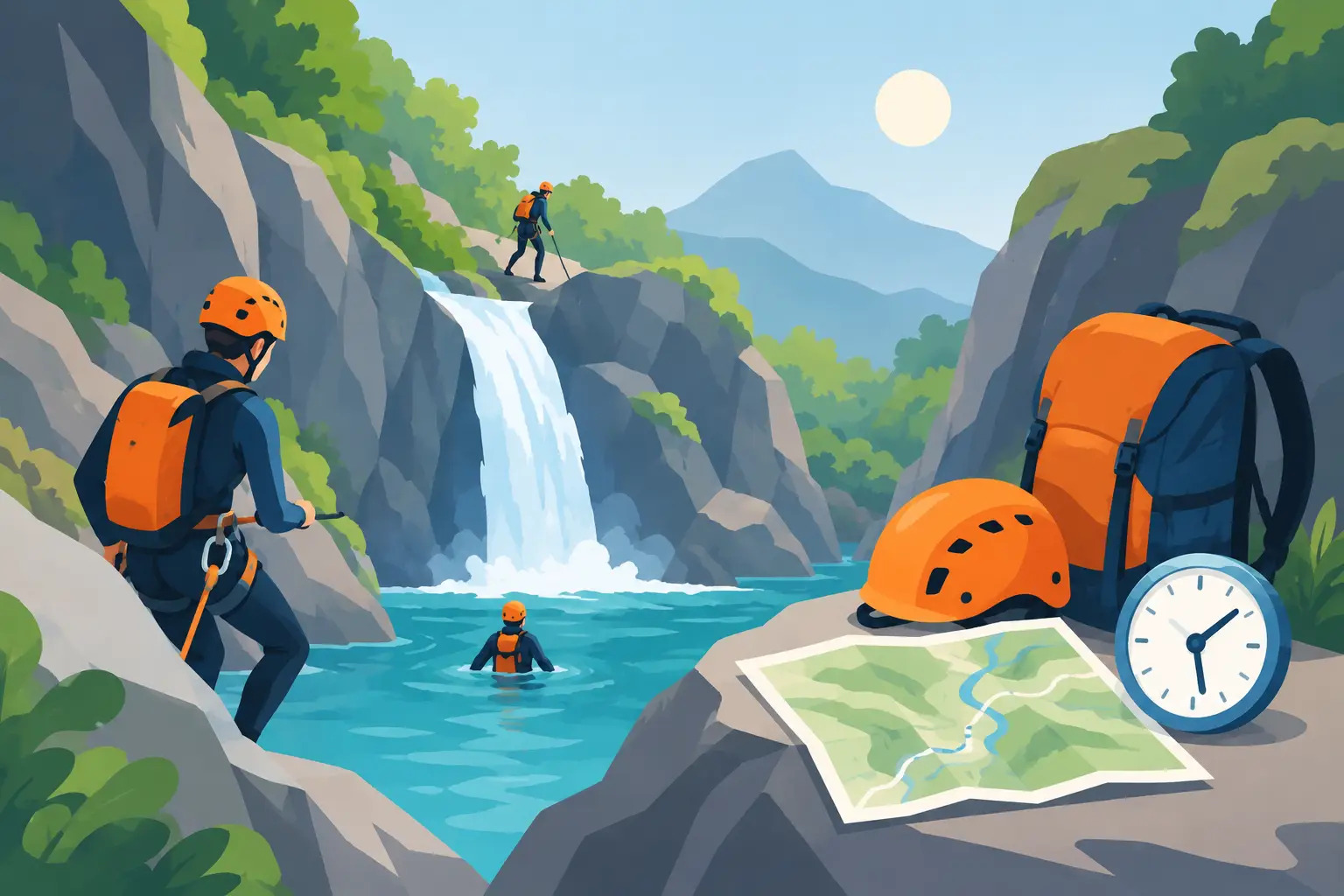
Your first abseil is only one part of the story. If you are asking, “how long does canyoning last?”, the useful answer is usually longer than the time spent lowering yourself beside a waterfall. A proper canyoning day includes briefing, fitting gear, learning the moves, travelling to the start, moving through the gorge, and getting changed afterwards. That is exactly what makes it feel like a real adventure rather than a quick thrill ride.
For most people, the right trip length comes down to how much action they want, how much time they have in Auckland, and whether they are keen to finish the day buzzing or comfortably challenged.
How long does canyoning last on a guided trip?
A guided canyoning experience generally falls into three formats: a half-day trip, a full-day trip, or a night adventure. The advertised duration normally covers the whole experience, not just the time in the canyon. That matters when you are organising a holiday itinerary, meeting friends, or arranging transport back to the city.
A half-day canyoning trip is the sharp, energetic option. Expect enough time to get comfortable in the gear, tackle a series of features and come away with a proper rainforest story – without committing your entire day. It suits first-timers, families with different energy levels, and visitors fitting adventure around other Auckland plans.
A full-day trip gives the canyon room to build. There is more time for bigger abseils, deeper gorges, waterfalls, jumps where conditions allow, and the slower bush sections that make the Waitākere Ranges feel far from the city. You are not rushing from one obstacle to the next. You have time to learn, laugh at the splashdowns, encourage your mates and enjoy the scenery between the high points.
Night canyoning has a different rhythm again. Darkness naturally slows the pace, and that is part of the appeal. Moving through the bush with headlamps, hearing the water before you see it, and spotting glowworms turns a shorter route into a memorable evening mission.
The clock starts before the first waterfall
Canyoning is a team activity in changing terrain, so a good guide does not treat the schedule as a stopwatch challenge. Before entering the gorge, your group needs to be fitted with the right equipment and shown how it works. Even complete beginners can take part, but everyone needs a clear introduction to abseiling, communication, footing and what to do at each stage.
That preparation takes time for a good reason. Once you are standing at the top of an abseil with water rushing nearby, it is far more fun to know what your guide is asking you to do. Training also means the group can move with confidence rather than spending the whole trip second-guessing every step.
Travel can add to the overall day too. The rainforest terrain around Piha is impressively close to Auckland, but it is still real wilderness. If you choose optional transport from central Auckland, allow for collection, the drive out, and the return journey after the adventure. If you are making your own way, arrive ready for the meeting time rather than treating it as the moment the fun begins.
What can make a canyoning trip take longer?
No two canyon days run in exactly the same time. The route may be familiar to the guides, but the group, weather and water all bring their own character.
Group size and experience are the biggest factors. A lively group of first-timers may take longer on the first few ropes while everyone finds their rhythm. That is normal. Canyoning is not a race, and nobody should feel pushed to move beyond their comfort level just to keep up.
Water conditions can also affect the plan. After rain, a canyon can look and sound completely different. Professional guides assess conditions and may adjust the route, pace or activities to keep the experience appropriate. This is not a compromise on adventure. It is how well-run canyoning stays exciting while respecting a powerful environment.
The group’s appetite for the experience matters as well. One group will want every photo, every jump and a long moment to take in the waterfall. Another will charge on after a quick grin at the camera. Your guides will keep the day moving, but canyoning has space for both approaches.
Half-day or full-day: which lasts long enough?
Choose a half-day trip when you want a first taste of canyoning, have a packed schedule, or are booking for a group that wants adventure without an all-day physical commitment. You will still get wet, get involved and feel the buzz of moving through wild terrain. It is not a watered-down bush walk.
Choose a full-day trip if the big features are calling. More time in the canyon means a more immersive experience and a greater sense of progression. You may begin the day slightly nervous about the ropes, then finish it ready to tell everyone about the biggest abseil. For birthdays, visiting mates, stag or hen groups, and teams looking for a shared challenge, that extra time often becomes the part people remember most.
Fitness helps, but you do not need to arrive as an elite athlete. Expect uneven ground, wet rock, walking, climbing over obstacles and the odd burst of effort. The better question is whether you are happy being active outdoors, following instructions and giving something new a go. A guided trip provides the equipment and the know-how; you bring a positive attitude and a willingness to get properly wet.
Plan for the whole experience, not just canyon time
Canyoning works best when you give it breathing room in your day. Avoid booking a tight dinner reservation straight after, especially if you are travelling back to the city. You will want time to get dry, warm up, swap stories and look through the photos.
Bring the personal items your operator asks for, turn up fed and hydrated, and leave valuables behind unless they are needed. A swimsuit and towel are obvious, but warm layers for afterwards can make a big difference. The canyon may be action-packed, yet the post-trip feeling is often pleasantly tired and ready for a proper meal.
For group organisers, build in a little flexibility. People arrive at different speeds, need different shoe sizes, and may need a confidence boost before their first descent. A well-organised operator handles those details, but a relaxed schedule helps everyone enjoy them.
Is canyoning worth a full day?
Absolutely, if you want more than a tick-box activity. A full day gives the experience contrast: the nervous excitement at the first rope, the focus of navigating a narrow gorge, the shock of cold water, the noise of a waterfall and the satisfaction of finishing as a team. In the Piha rainforest, it also gives you time to notice the lush bush, volcanic rock and hidden corners that are easy to miss when you are hurrying.
That said, longer is not automatically better for every person. A half-day can be the perfect choice for a cautious newcomer or someone travelling with a busy itinerary. The best canyoning trip is the one that leaves you thrilled, not exhausted before the fun has properly started.
AWOL Canyoning Adventures structures guided experiences around that balance: serious scenery and genuine action, backed by training, equipment and guides who know how to bring newcomers into the adventure.
A simple way to choose your trip length
If you only have a morning or afternoon free, start with a half-day. If canyoning is the headline event of your day and you want the bigger, fuller rainforest experience, make room for a full-day trip. If glowworms and an after-dark atmosphere sound more like your kind of story, choose a night outing and keep the following morning easy.
Whatever you choose, do not judge canyoning by minutes on a rope. Give yourself time to learn, splash, scramble, laugh and stand at the bottom of a waterfall wondering why you did not do it sooner.