
Piha Canyoning Review: Worth the Splash?

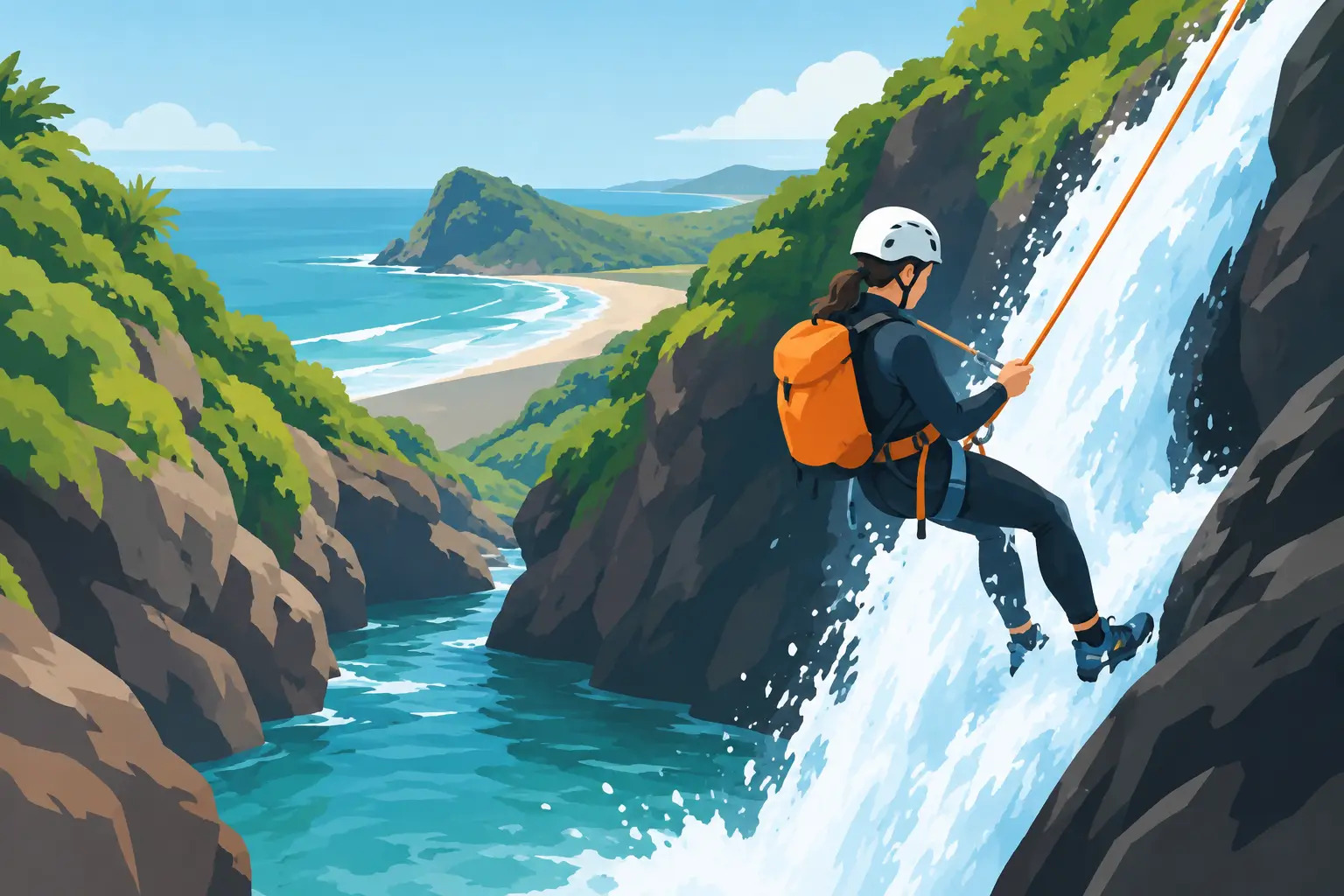
The first abseil is the moment most people remember: boots planted against wet rock, rainforest dropping away beneath you, then the simple relief of realising you know exactly what to do. This Piha canyoning review is for anyone weighing up whether that moment – plus waterfalls, jumps, caves and plenty of laughs – is worth getting properly wet for.
Piha canyoning review: the short answer
Yes, for active travellers, local groups and first-timers who want a serious outdoor day without needing technical experience, Piha canyoning is absolutely worth it. The setting is the big draw. Within reach of Auckland, you are in dense Waitākere rainforest, moving through a landscape that feels a long way from city streets: dark pools, volcanic rock, fern-framed waterfalls and tight gorges where the only way onwards is through.
The trade-off is straightforward. Canyoning is not a sightseeing stroll with a dramatic backdrop. You will scramble over uneven ground, swim in cool water, learn to abseil, and accept that your hair, boots and probably your grin will be soaked by the end. If that sounds like a brilliant day out, you are in the right place.
It also works particularly well for people who have done the usual coastal walk and want a different side of Piha. Rather than looking at the landscape from a track, you travel through it.
What the experience is really like
A well-run canyoning day begins before anyone clips onto a rope. Guides talk the group through the plan, fit the equipment and teach the essential techniques in plain language. You do not need to turn up knowing knots or having abseiling experience. You do need to listen, follow instructions and be ready to give things a go.
Once in the canyon, the pace has a pleasing rhythm. There are short bush approaches, technical sections that demand concentration, quiet moments beneath the canopy, then bursts of pure action. One minute you are edging backwards over a waterfall on rope; the next, you are floating through a pool or lining up for a jump.
The standout feature is variety. Major abseils give the day real adrenaline, but they are not the whole story. Narrow rock passages, waterfall descents, natural pools and cave-like sections keep the route moving. The rainforest makes even the pauses feel special, particularly when guides share the local stories and natural history behind the terrain.
For many groups, the best part is the confidence curve. Someone who starts the morning quietly wondering whether they can manage an abseil often finishes it ready to encourage the next person down. That is the magic of a guided experience: the challenge stays real, while the support is right there.
Choosing the right Piha canyoning trip
Your best option depends less on whether you are “an adventurous person” and more on how much time, water and vertical rock you want in the day.
A full-day trip is the choice for people chasing the biggest hit of canyoning. Expect more time in the gorge, bigger abseils and a fuller mix of the features that make Piha special. It suits visitors who want one unforgettable outdoor day on their holiday, and local groups looking for a proper shared challenge rather than a quick activity.
A half-day introductory trip is a smarter call if you are short on time, travelling with people of mixed confidence, or simply want to test your appetite for canyoning. It still delivers the wet, wild fun of moving through a real canyon, but with a lighter commitment. Do not mistake shorter for tame: even an introductory session can feel like a genuine adventure.
Night canyoning changes the atmosphere completely. With darkness in the bush and glowworms adding tiny points of light, familiar canyon features feel more atmospheric and more immersive. It is a strong pick for repeat visitors, couples, friends and anyone after a memorable alternative to dinner and drinks. It does require a willingness to embrace the dark and trust the process, which is exactly why it sticks with people.
AWOL Canyoning Adventures runs these guided formats with the gear, training and local know-how that let newcomers step into demanding terrain with confidence.
Fitness, confidence and the honest reality
You do not need to be an elite athlete, but a basic level of mobility and fitness makes the day more enjoyable. You should be comfortable walking on uneven trails, climbing over rocks, swimming in water and spending several hours active. If you have a knee, shoulder, back or medical concern, raise it when booking rather than hoping it will disappear on the day.
Fear of heights deserves an honest answer too. You do not have to love heights to enjoy canyoning. Plenty of people arrive nervous about the first abseil. The difference is that you are not left to work it out alone: the system is explained, the guide controls the set-up, and you descend at a manageable pace. Still, if being near an edge causes panic rather than nerves, a shorter trip may be the better starting point.
Jumps are another area where expectations matter. They can be huge fun, but a good canyoning experience never relies on bravado. Guides assess conditions and give clear direction. The aim is challenge with judgement, not pressure to prove anything to the group.
Safety without killing the buzz
The best Piha canyoning review should not pretend that safety is a boring footnote. It is what makes the exciting bits possible. Professional guides manage ropes, monitor weather and water conditions, set the pace, and coach participants through each obstacle. Essential canyoning equipment is provided and fitted for the activity, so there is no need to own specialist kit or guess what to bring.
Conditions can change in a rainforest canyon. Rain, water flow and track conditions affect how a trip runs, which is why flexibility matters. A guide changing a route, skipping a feature or adjusting the pace is not a downgrade. It is good decision-making in a wild environment.
Your part is simple: pay attention at briefings, keep the group together, tell guides about relevant health concerns, and follow biosecurity instructions. Clean footwear and careful access help protect the rainforest, including the precious kauri environment around Piha. Great adventures should leave more memories than impact.
What to bring, and what not to overthink
Bring swimwear for under your canyoning gear, a towel and a dry change of clothes for afterwards. Secure any medication you need, and ask in advance about glasses, contact lenses or other personal requirements. Most people also appreciate a water bottle and something to eat before an active session, especially on a full-day adventure.
Leave valuables behind where possible. Mobile phones and cameras are tempting, because the scenery is wildly photogenic, but water, rock and ropes are a poor combination for loose kit. If you bring something into the canyon, it should be properly protected and secured.
You also do not need to spend the week before your trip buying outdoor gear. That is one of the strongest reasons to choose a guided day. The practical barriers – specialist equipment, skills, route knowledge and transport options from central Auckland – are handled, leaving you free to focus on the fun.
Is it good value for a group?
For friends, families with capable older children, stag or hen groups, and work teams, canyoning offers something a standard activity often cannot: everyone has a role in the story. You will have different comfort levels, but you still move through the canyon together, celebrate the big descents together and emerge with the same muddy, soaked photos.
It is not the cheapest way to spend a day outdoors, nor should it be compared with a self-guided beach walk. You are paying for trained guides, technical equipment, route access, instruction and a full-on experience that would be difficult and inappropriate to recreate independently. For a group that wants a genuine shared memory, that difference matters.
If you are unsure, choose the trip that matches your least confident participant rather than your loudest one. A group that feels supported will have far more fun than one pushed into a longer day before it is ready.
Piha canyoning is for the people who would rather finish a day tired, damp and buzzing than merely say they saw the view. Pick the format that fits your confidence, listen to your guides, and give the first step over the waterfall a chance to surprise you.