
How Guided Waterfall Descents Work Safely

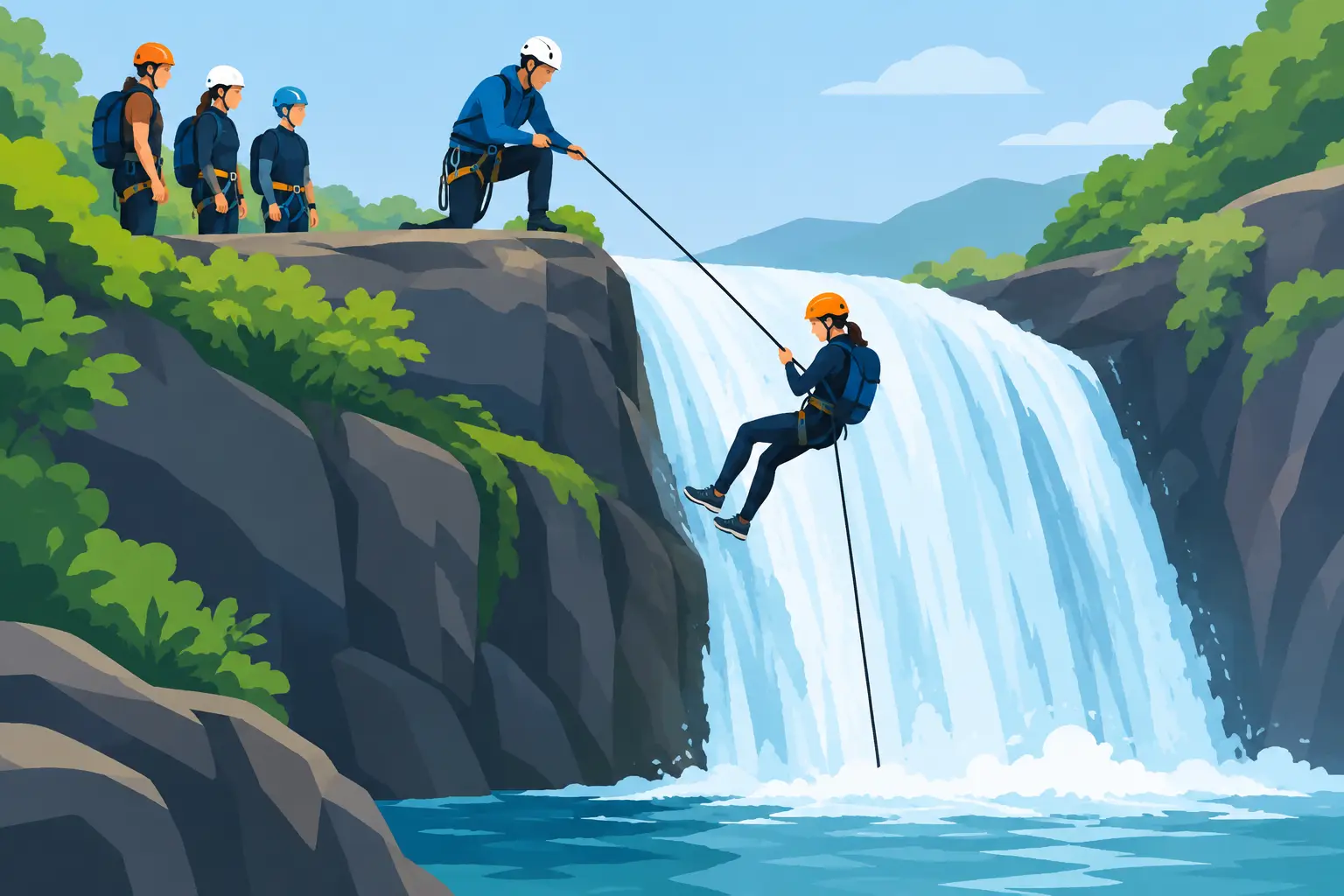
The moment that gets everyone’s attention is usually the same: boots planted on wet rock, water rushing past your legs, and a drop disappearing into the rainforest below. Knowing how guided waterfall descents work turns that big moment from intimidating into brilliant. You are not expected to arrive as a rope expert. Your guides provide the gear, explain the system, demonstrate the technique and coach you through each move.
A guided descent is not about being pushed past your comfort zone. It is about taking on a real challenge with the right preparation, a capable team and an experienced guide right there when it counts. That is why complete beginners can enjoy a proper canyoning day around Piha, while still getting the thrill of stepping over the edge of a waterfall.
How guided waterfall descents work from the start
A waterfall descent, often called an abseil, uses a rope system that lets you lower yourself down a steep rock face or through falling water in a controlled way. Before anyone approaches the edge, the group is fitted with technical equipment. This typically includes a wetsuit for warmth and protection, a helmet, harness and specialised canyoning footwear. Your guide checks that each item sits correctly and is secure.
The rope is anchored to a solid, assessed point above the descent. Guides set up the system before participants use it, then inspect it again as conditions require. Rainforest canyons are changing environments: water levels, rock grip and weather all influence how a descent is managed. A good guided trip plans for those variables rather than treating every day as identical.
You will then receive a simple briefing on the equipment and body position. The key idea is straightforward: the rope supports your weight while you use your brake hand to control your speed. Your other hand helps you balance against the rock. It can feel unfamiliar for the first few seconds, especially when you lean back and trust the harness, but the technique becomes surprisingly natural once you have practised it on level ground or a smaller slope.
Training happens before the big drop
Guides do not hand over a rope and hope for the best. They break the process into manageable actions: how to hold the rope, how far apart to place your feet, where to look, when to move and how to stop. You will normally rehearse the movement before the main descent, with clear instructions designed for people who have never abseiled before.
The first lesson is often the most important: keep your body low and lean back into the harness. Newcomers naturally want to stand upright and cling to the rock, but that makes the descent harder. A strong, wide stance gives you better balance, while the rope and harness do their job.
Your guide will also explain the calls used on the rope. In a noisy gorge, shouting a full conversation is not always possible, particularly beside a waterfall. Short, clear calls and hand signals help the team know when someone is on rope, when the route is clear and when the next person can begin. It is organised, practical and much less complicated than it looks from the bottom.
What happens at the waterfall edge
The edge is the mental crux for most first-timers. You might be standing on smooth volcanic rock with spray in the air and a view framed by dense native bush. This is where guides slow things down. They check your attachment, repeat the key points and position you carefully before you start.
Rather than jumping off, you turn to face the rock, sit back into your harness and walk your feet down the wall. On a waterfall abseil, the route may begin beside the water before moving into the spray, or it may run directly through the flow. Either way, your guide chooses the line and gives you the direction needed for that specific feature.
You control the pace within the technique you have been taught. Some people descend steadily from the first step. Others take a breath, settle into position and move in small stages. Both are fine. The goal is not to race down. The goal is to stay balanced, listen well and enjoy the huge rush of being in a place that is normally inaccessible without ropes.
Water changes the challenge
Descending a dry cliff and descending through a waterfall are not exactly the same. Water can reduce visibility, make rock more slippery and make guide communication harder to hear. It also adds a level of excitement you simply do not get on a standard climbing wall.
That is why canyoning guides select routes and techniques to suit the day. In some conditions, a direct waterfall line is the highlight. In others, a side line gives a better grip and a more comfortable experience. The adventure stays real, but sensible choices always come first.
The guide’s job does not stop at the anchor
A professional guide manages far more than the rope itself. They assess the group’s experience and confidence, watch the weather, choose appropriate routes and keep the party moving at a pace that avoids people getting cold or tired. They also bring local knowledge that changes the whole experience, from reading water movement to understanding the rainforest and its history.
At the top of a descent, one guide may run the rope system while another supports the group, depending on the canyon and group size. At the bottom, guides help participants move away from the landing area, unclip safely when instructed and regroup before the next section. This keeps the route flowing and prevents the bottom of the waterfall from becoming crowded.
For guests, the main responsibility is equally valuable: pay attention, follow instructions and be honest about how you are feeling. If you are nervous, say so. Guides would much rather give you extra coaching before an abseil than find out halfway down that you were unsure. Confidence is built through information and action, not by pretending you are fearless.
It is a team activity, not a solo stunt
One of the best parts of guided canyoning is the group energy. You watch your mates tackle a descent, hear the cheers from below and then get your own turn. For a birthday group, a family with different confidence levels or a work team wanting a story better than another dinner out, that shared build-up is part of the fun.
There is usually plenty happening between waterfalls too. A full canyoning trip can include narrow gorges, natural pools, jumps where conditions allow and sections of scrambling through spectacular bush. Your guides explain each feature and offer alternatives when appropriate. Jumping, for example, is not treated as compulsory just because it makes a great photo. The best day is one where everyone is challenged at the right level.
This is also why fitness matters, but athletic perfection does not. You need to be comfortable being active, walking over uneven ground and spending time in water. You do not need previous rope experience or your own technical kit. People who are willing to listen, have a go and support the group often get the most from it.
What to expect after you reach the bottom
Landing at the bottom of a waterfall usually brings a rush of relief followed quickly by a massive grin. Once the guide confirms you are clear of the rope, you move into the next safe area and give the person above room to descend. You may be wet, buzzing and ready to tell everyone exactly what it felt like.
The canyon keeps moving, though. Staying warm, drinking water and keeping your helmet on when instructed are all part of looking after yourself and the group. Your guide will tell you when it is time to scramble, swim, jump or simply pause and take in the scenery.
AWOL Canyoning Adventures supplies the technical equipment and beginner-friendly instruction that make these rainforest experiences accessible, but the sense of achievement is all yours. You walk away having done something properly adventurous, not just watched it from a lookout.
If the edge makes your stomach flip a little, that is normal. Ask questions, take the practice seriously and let the guide talk you through the first steps. A waterfall descent is one of those rare experiences that feels enormous beforehand, then leaves you wondering what else you are capable of once your boots are back on solid ground.