
Abseiling Versus Canyoning Differences Explained

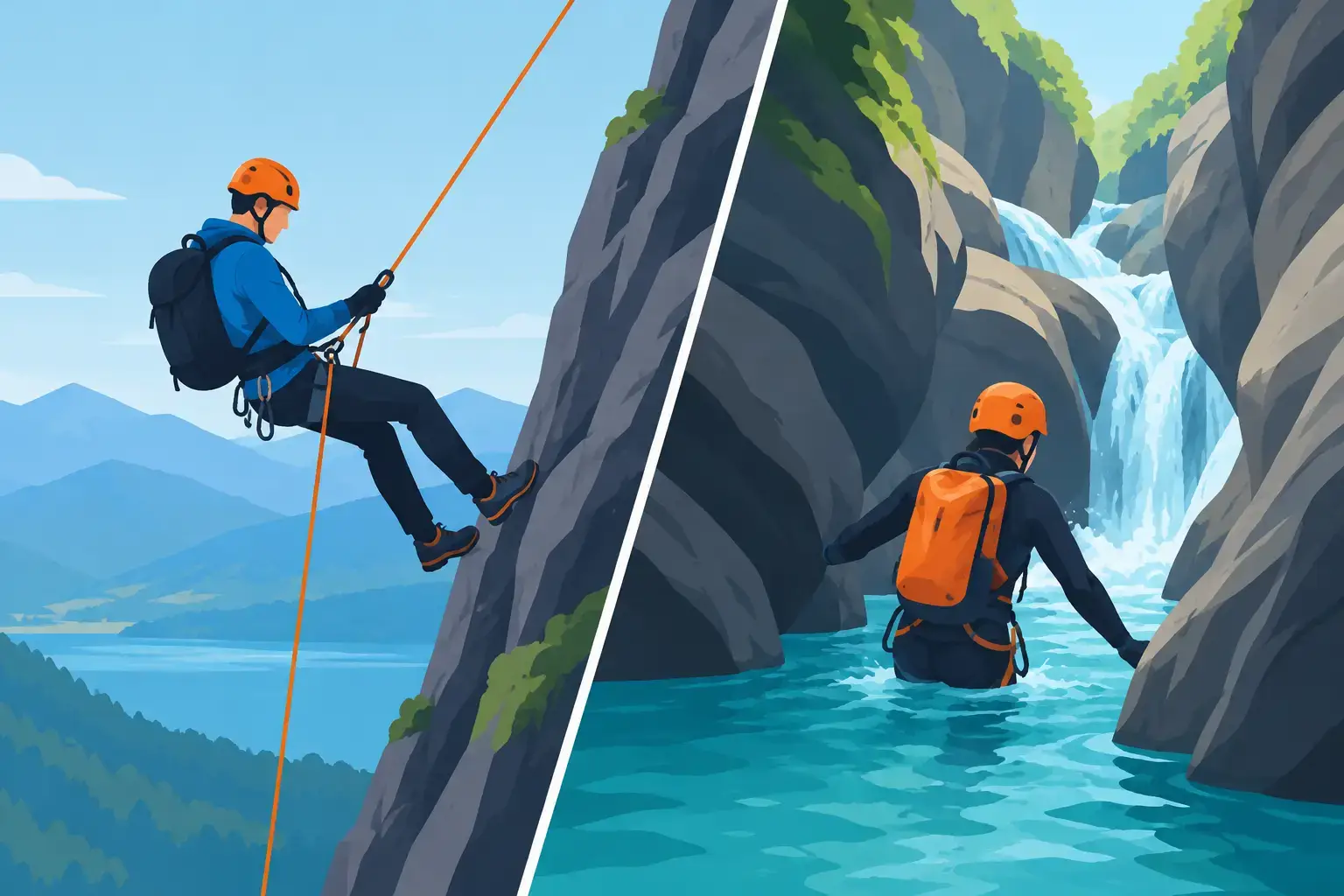
A big waterfall, a harness and a rope can make the abseiling versus canyoning differences look blurry at first. Both get you into spectacular places that are hard to reach on foot. Both can put you at the top of a drop with your heart thumping. But abseiling is one rope skill, while canyoning is the full, wet, wild journey through a gorge.
If you are choosing an outdoor adventure near Auckland, that distinction matters. One experience is centred on descending a vertical face. The other might include an abseil, then a scramble through boulders, a slide into a pool, a jump beside a waterfall and a walk through lush rainforest. Same rope? Sometimes. Completely different day out? Usually.
Abseiling versus canyoning differences at a glance
Abseiling, also called rappelling in some parts of the world, is the controlled descent of a rope. You wear a harness, connect into the rope and use a belay device to manage your speed as you walk backwards down a cliff, rock face or waterfall. It can be a standalone activity, with the climb or walk to the top followed by a descent.
Canyoning is a journey through a canyon or gorge using a mix of movement skills. Depending on the route, that can mean walking, scrambling, wading, swimming, sliding, jumping and abseiling. The canyon dictates the route. You follow the watercourse and the rock features it has carved, rather than simply arriving at one descent and heading home.
Think of abseiling as one seriously exciting chapter. Canyoning is the whole adventure story.
What an abseiling trip is really like
On a dedicated abseiling experience, the main event is the vertical descent. You may tackle one large drop or progress through several descents, depending on the location and trip design. There is often time to focus on the technique: how to sit back in the harness, position your feet, control the rope and move steadily down the wall.
That makes abseiling a brilliant choice if the rope itself is what excites you. Maybe you have watched someone descend a waterfall and thought, “I want to do that.” Perhaps you want to build confidence with heights in a structured setting. A quality guided session gives you a clear introduction to the equipment and the feeling of trusting it.
The pace can be more concentrated, too. There may be waiting time while each person descends, particularly in a group. That is not a bad thing. It gives you a chance to watch, get advice from the guide and cheer on your mates before it is your turn at the edge.
What makes canyoning a bigger adventure
A canyoning trip uses abseiling where the terrain requires it, but the rope is only one part of the day. You are moving through a living landscape: water underfoot, polished rock, narrow passages, deep pools and rainforest overhead. The route changes gear constantly, which is exactly why so many groups love it.
On a full canyoning day, you might begin by learning the basics and hiking into the bush. Once in the gorge, you could abseil beside or through a waterfall, clamber over boulders, squeeze through a rocky section, float through a pool and take on optional jumps where conditions allow. Every obstacle has a different feel.
That variety makes canyoning more social than many people expect. Your group is not just waiting for a descent. You are helping each other over rocks, sharing the buzz after a jump and laughing when someone emerges from a pool with water pouring out of their helmet. It is physical, photogenic and properly memorable.
Skills and equipment: what changes?
Both activities use specialist safety equipment and benefit from professional instruction. For abseiling, the focus is generally on the harness, helmet, rope system and descending device. Your guide explains how the system works, checks your set-up and manages the safety system while you build confidence on the rope.
Canyoning requires that same rope knowledge when there is an abseil, plus equipment suited to the water and rough terrain. A wetsuit helps you stay warmer during long periods in pools and streams. Sturdy canyoning footwear improves grip on wet rock. Depending on the trip, you may also use a pack, buoyancy aid or other route-specific gear.
The biggest difference is not that you need to arrive with more skills for canyoning. On a guided trip, beginners are taught what they need as the day unfolds. The difference is that canyoning asks you to adapt. You may be walking one minute, lowering yourself down a rock step the next, then swimming shortly afterwards.
Fitness, heights and confidence
Neither activity is reserved for elite adventurers. You do not need to be a climber to abseil or an expert swimmer to enjoy many guided canyoning routes. But being honest about your comfort zone helps you choose the right trip.
Abseiling can feel mentally intense for people who dislike heights. That first step backwards is a genuine challenge, even when the system is secure and your guide is talking you through it. Once you lean back and feel the rope hold, nerves often turn into a huge grin.
Canyoning can be more physically demanding because the action is sustained. You may cover uneven ground, spend hours in water and use your legs and balance across slippery surfaces. It suits people who enjoy being active and do not mind getting completely wet. If jumps are part of the route, they should be treated as optional only when your guide confirms conditions are suitable and you are comfortable.
For families, mixed-ability groups or first-time adventurers, a half-day introductory canyoning trip can be the sweet spot. You get the real canyon experience without committing to the length and intensity of a full day. If you want bigger abseils, more features and a full rainforest mission, the longer trip delivers more of everything.
The environment changes the experience
A dry cliff-face abseil is about height, exposure and rock. A rainforest canyon adds water, sound and atmosphere. The roar of a waterfall can make a familiar rope descent feel completely different. Mossy walls close in around you, the light changes beneath the canopy and every pool brings a fresh burst of energy.
That is why canyoning is not simply “abseiling in water”. Water changes the route, the equipment, the temperature and the decisions guides make on the day. Rainfall, water levels and group ability all affect what is sensible. Good canyoning is never about forcing a fixed plan. It is about reading the conditions and choosing the safest, most enjoyable way through.
In the Waitākere Ranges, guided canyoning also offers something a climbing wall cannot: a close-up encounter with subtropical bush, waterfalls and the stories held in the landscape. The adventure has a wild feel, yet it is accessible from the city with the right planning and local knowledge.
Which one should you choose?
Choose abseiling if your main goal is to experience a rope descent, test your head for heights or spend time refining a focused outdoor skill. It is direct, thrilling and ideal if the vertical challenge is the part you came for.
Choose canyoning if you want a full-on group adventure with plenty of variety. It is the stronger choice for mates, visitors, work teams and anyone who would rather spend the day moving through a waterfall-filled landscape than doing one type of activity. You will still get the buzz of abseiling, but you will earn it through a much bigger mission.
AWOL Canyoning Adventures is built for people who want that bigger mission without needing to own gear or know the technical ropes beforehand. Guides provide the equipment, the training and the route knowledge, so you can concentrate on the fun, the scenery and giving your mates something to talk about for weeks.
A quick word on safety and conditions
An abseil or canyoning descent may look effortless in photos, but the ease comes from preparation. Guides assess conditions, set up systems, brief the group and adjust plans where needed. Participants need to listen closely, wear the supplied equipment correctly and speak up about injuries, medical conditions or worries about water and heights.
Weather can also change the call. A canyon that is awesome fun in suitable conditions may not be the right place after heavy rain. Flexibility is part of outdoor adventure, not a compromise. The best day is the one that matches the conditions, the group and the experience level of everyone involved.
If a waterfall, a harness and a rainforest gorge are already calling your name, do not get stuck on the terminology. Pick the challenge that makes you feel excited enough to step forward, then let a good guide help you make that first move with confidence.