
Piha Gorge Exploration Guide for First-Time Canyoning

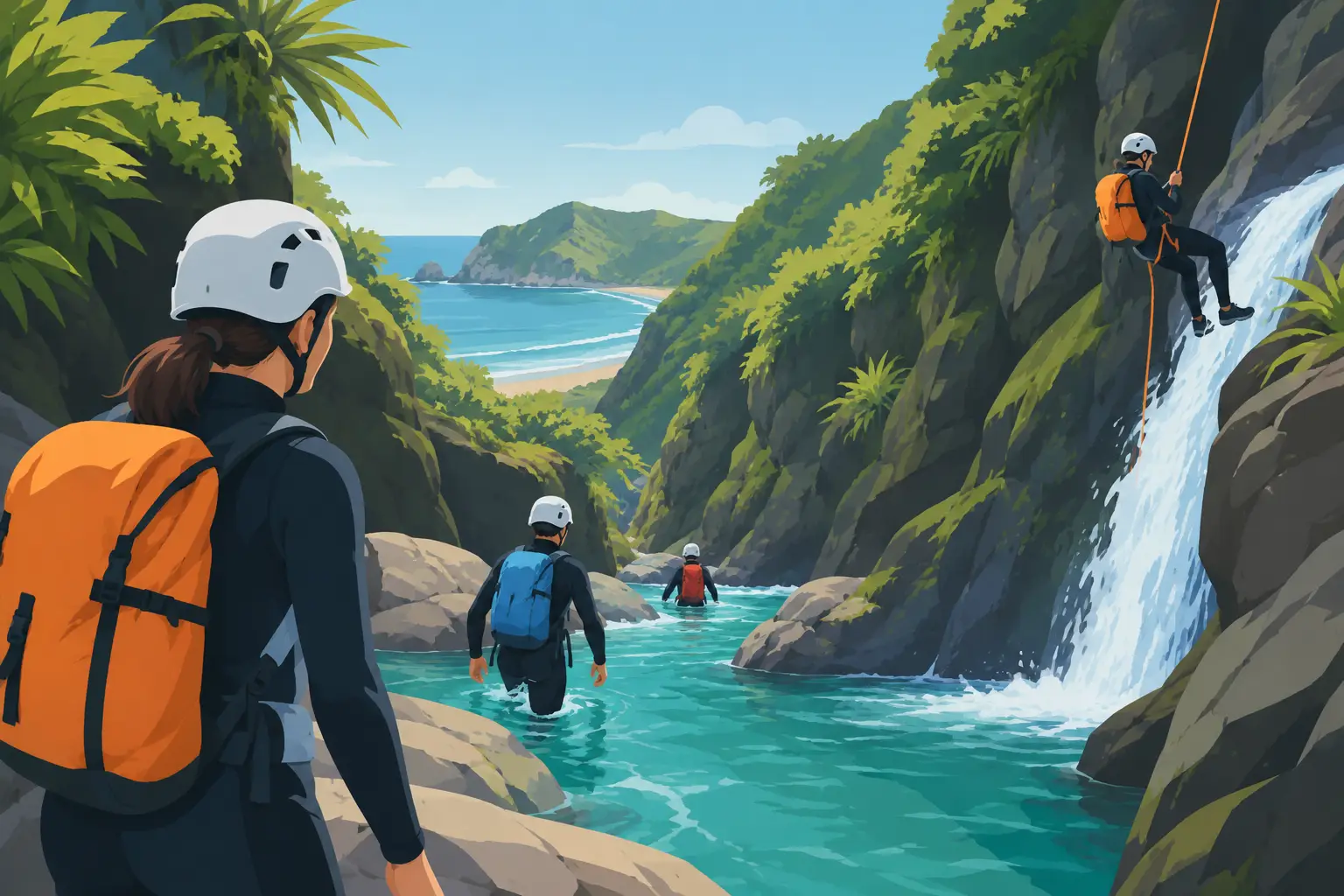
The rock is wet, the water is cool, and a waterfall is suddenly the way forward. That is the point of a proper Piha gorge exploration guide: not to turn the rainforest into a checklist, but to help you arrive ready for the real thing. Piha’s canyon terrain rewards people who want more than a viewpoint or a beach walk – and it is far more fun when you know what the day will ask of you.
A guided canyoning trip takes you into narrow, water-carved sections of the Waitākere Ranges where bush, rock and moving water set the pace. You may abseil beside waterfalls, scramble through smooth chutes, swim in pools, leap from ledges where conditions allow and move through caves. It is active, social and properly memorable, but it is not a casual wander in trainers.
What Piha gorge exploration really involves
Piha is famous for its wild west-coast scenery, but the gorge experience happens away from the busy beach. Once you enter the rainforest, the noise of the road fades quickly. Ferns close in, streams run through dark volcanic rock, and the route becomes a sequence of natural obstacles rather than a marked walking track.
That is what makes canyoning different from hiking. You are not simply walking beside a stream. You are travelling through it, over it and sometimes down it. A waterfall can be a scenic stop from above, or it can become your next abseil line. A deep pool can mean a swim, while a boulder section can call for teamwork, balance and a little determination.
The thrill comes from the variety. One minute you are standing in lush rainforest, listening to the water; the next, you are clipped into a rope and stepping backwards over a drop. There is time to take in the scenery, but the day has momentum. Expect to get wet, muddy and delighted by it.
Choose the right Piha gorge exploration trip
The best trip is not automatically the biggest one. It depends on how much time you have, how confident you feel in water and heights, and what you want from the day. First-timers often enjoy a shorter introduction because it gives them the essential buzz of canyoning without committing to a full day of physical activity. It is a strong choice for mixed-ability groups, nervous adventurers and anyone fitting a big experience around a short Auckland stay.
A full-day canyoning trip is for people who want the complete rainforest mission. You will generally spend longer in the gorge and take on more varied terrain, including bigger abseils, waterfalls, jumps and cave sections. You do not need previous canyoning experience, but you should be ready to move, swim and stay engaged for a full day outdoors.
Night canyoning brings a completely different mood. The bush gets quieter, headlamps pick out the water ahead, and glowworms give the gorge an other-worldly feel. It suits people who have already done plenty of daytime sightseeing and want their evening to become the story they tell afterwards. Darkness adds atmosphere, not guesswork – a guided night trip is planned and led for those conditions.
For a birthday, stag or hen weekend, work crew or group of mates, think about the people in the group rather than the loudest person in the chat. The right itinerary is one that lets everyone feel challenged and included. A good guide can offer encouragement, practical coaching and alternatives where conditions or confidence make that sensible.
Do you need experience or specialist kit?
No prior canyoning experience is necessary on a guided trip. That is the beauty of it. You do not need to own ropes, harnesses, wetsuits or technical footwear, and you do not need to know how to set an abseil. Your guides provide the equipment, explain how it works and teach you the techniques before you need them.
Listen closely during the briefing. Abseiling is not about bravado. It is about learning a simple system, keeping your body position steady and following clear instructions. Most people feel a spike of nerves before their first descent. Then they take the weight on the rope, settle into the movement and reach the bottom wearing a grin that was not there five minutes earlier.
You will still need to bring your own basics. Wear swimwear underneath your provided wetsuit and bring a towel for afterwards. A secure pair of shoes that can get wet is usually required, although your operator will confirm exactly what works for the trip. Leave jewellery and valuables behind. Bring any essential medication, and tell the guides about medical conditions, injuries or worries about swimming before you set off.
Fitness, swimming and heights: what to be honest about
You do not need to be an elite athlete to enjoy Piha canyoning. You do need a reasonable level of everyday fitness. Expect uneven ground, slippery rocks, swimming, climbing over obstacles and periods of steady movement. If a few hours of active outdoor fun sounds appealing rather than punishing, you are likely on the right track.
Swimming confidence matters because water is part of the experience. You may be wearing a buoyant wetsuit and have guides close by, but being able to stay calm and move through water will make the day more enjoyable. If you are unsure, say so early. It is much easier for guides to support you when they know what you need.
Heights are more complicated. Plenty of people who dislike exposed ledges still enjoy abseiling because they are securely attached and focused on a clear task. Others find the first backwards step a genuine challenge. Both reactions are normal. The goal is not to prove anything. It is to take on an exciting experience with the right support and come away feeling stronger than when you arrived.
Respect the rainforest while you play in it
The Waitākere Ranges are not an adventure playground built for visitors. They are a living rainforest catchment with native birds, fragile waterways and important cultural and natural heritage. Guided access helps keep the experience organised, but every participant has a role in looking after the place.
Follow cleaning instructions for footwear and equipment to help prevent the spread of kauri dieback. Stay with your group and use the access routes your guides specify. Do not leave food wrappers, bottles or any other rubbish behind, even if it seems small enough to disappear in your pack. The same goes for skipping, throwing or moving rocks for a photo – the gorge is already dramatic without rearranging it.
Photos are part of the fun, especially when your group is standing below a waterfall or celebrating an abseil. Take the shot when it is safe, then put the phone away. Wet rock and rushing water deserve your attention. The best photos tend to happen when people are actually having a good time, not trying to stage every moment.
Make the day run smoothly
Plan to arrive rested, fed and ready to get wet. A heavy night out beforehand is a poor match for cold water, physical movement and safety briefings. Eat a solid meal, drink water and check the forecast, but do not assume rain ruins canyoning. Rainforest canyoning is a water activity, and a little weather can add to the atmosphere. Severe conditions are different, of course, and professional operators will adjust plans if safety requires it.
If you are visiting Auckland without a car, transport can make the difference between a great day and a complicated one. AWOL Canyoning Adventures offers an optional pick-up from central Auckland, which means you can focus on the canyon rather than navigating unfamiliar roads before an active day.
Bring a change of clothes for afterwards and give yourself time to warm up, eat well and replay the best bits with your group. You may be tired, but it is the satisfying kind – wet socks, muddy knees and the earned feeling of having done something properly different.
Piha rewards people who show up ready to listen, laugh and take the first step over the edge. Pick the trip that suits your group, trust the training, and let the rainforest do the rest.