What Age Is Canyoning Suitable For in Auckland?

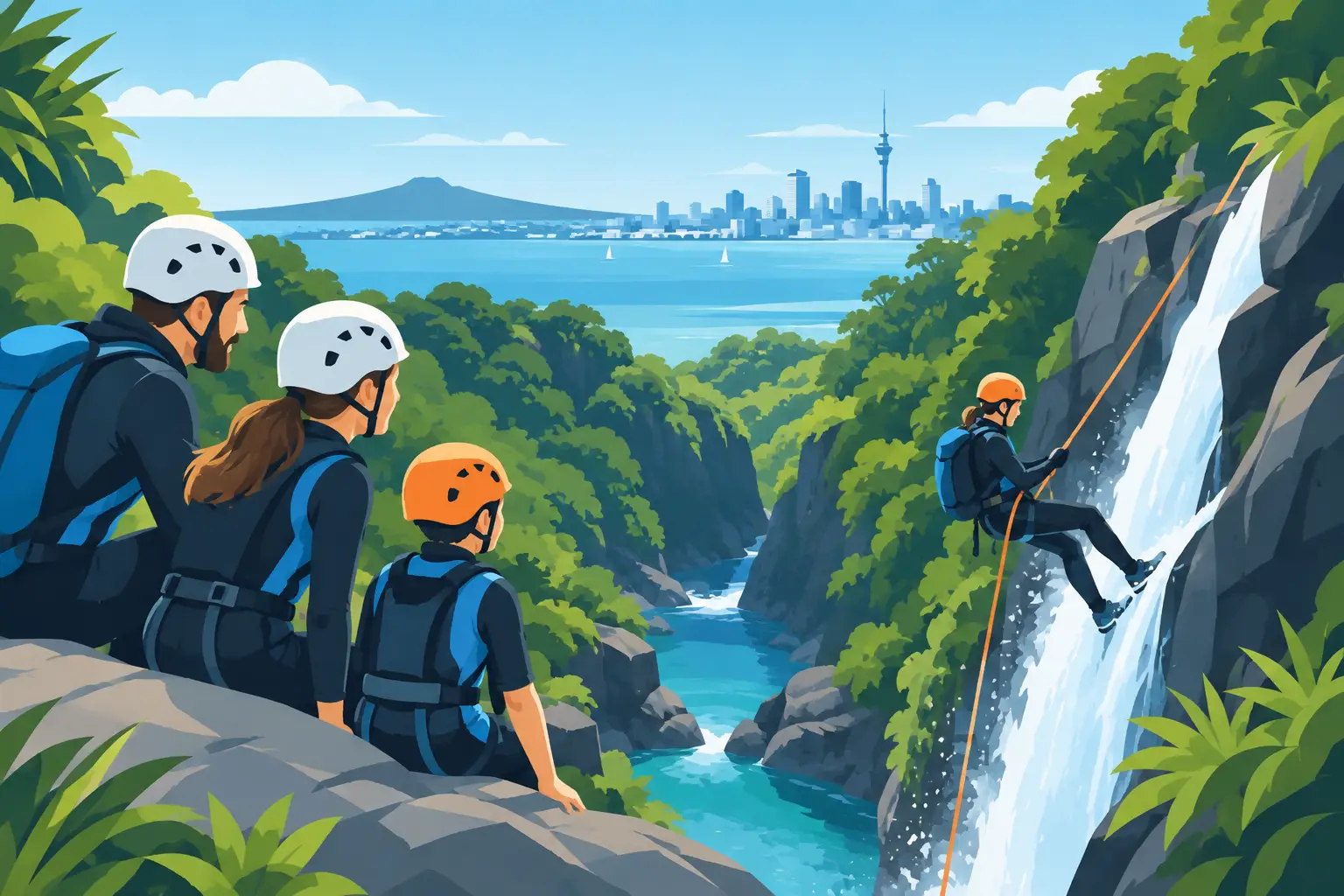
Standing at the top of a waterfall is a brilliant leveller. The loudest teenager in the group may suddenly go quiet; the parent who was unsure on the walk in may clip onto the rope and beam all the way down. So, what age is canyoning suitable for? There is no single birthday that makes someone ready. The better question is whether the person has the confidence, physical ability and appetite for the specific trip ahead.
Canyoning is not a spectator sport. You will be walking through rainforest, climbing over rocks, moving through water, abseiling beside waterfalls and, depending on the route, squeezing through caves or making optional jumps. A well-run guided trip teaches the skills and provides the specialist kit, but each participant still needs to take an active part.
What age is canyoning suitable for?
Age limits vary between canyoning operators and trip types, so always check the requirements for the experience you are booking. A short, introductory canyon can suit younger teens who are comfortable in water and happy to listen, while a full-day adventure with bigger abseils and a longer approach is better suited to older teenagers and adults with stronger stamina.
For children, the deciding factor is rarely enthusiasm alone. They need to be able to follow instructions first time, cope with cold water and uneven ground, and stay focused when they are tired. A child who loves climbing walls, swimming and muddy bush walks may be more prepared than an older teen who dislikes heights or finds being out of their comfort zone overwhelming.
Adults should not assume age rules them out either. Plenty of people take up canyoning well beyond their twenties. If you have reasonable mobility, can manage a sustained walk over rough terrain and are prepared for a physical day outdoors, a guided introductory trip can be a cracking way to try it. The goal is not to race anyone through the canyon. It is to move safely, take in the scenery and enjoy every waterfall along the way.
Readiness matters more than the number
The most useful way to judge suitability is to look at the person in front of you, not the date on their passport. Four things matter most: swimming confidence, fitness and mobility, response to heights, and willingness to follow guide instructions.
Swimming confidence and water comfort
You do not need to be a competitive swimmer to go canyoning, but you do need to feel reasonably at ease in water. Depending on conditions and the trip, there may be pools to swim through, floating sections or moments where you need to keep yourself calm while water rushes around you. Wetsuits and buoyancy equipment help, and guides will explain what to do before each obstacle, but they do not replace basic water confidence.
For younger participants, be honest about this. Someone who panics when water reaches their shoulders is unlikely to enjoy a canyon, even if they are bold on dry land. A pool session beforehand can be a useful confidence check.
Fitness, balance and stamina
Canyoning calls for practical fitness rather than perfect gym numbers. Expect walking, scrambling, stepping between slippery rocks, climbing short sections and using your legs while abseiling. The terrain is uneven and a full-day trip can feel far more demanding than a stroll along a formed track.
A good benchmark is whether the participant can happily complete a decent bush walk, get up and down from the ground without help, and remain positive when wet, muddy and a little tired. If that sounds like fun rather than punishment, they are heading in the right direction.
Mobility matters too. Previous injuries, knee concerns, limited shoulder movement or back pain do not automatically mean canyoning is off the cards, but they may affect which trip is sensible. Speak to the operator before booking, describe the issue clearly and choose an experience that matches the person rather than hoping they can push through it.
Heights and the head game
Abseiling is often the moment people remember most. It is also where nerves can show up, even in people who expected to be fearless. Being cautious around heights is normal. The key difference is whether a participant can listen, trust the system and take one instruction at a time.
Guides break the technique down before anyone goes over an edge. Harnesses, helmets and ropes are part of the safety setup, and the first abseil is usually where confidence begins to build. Still, canyoning is not the right day out for someone who knows they will freeze completely at height or feels pressured into going.
No one wins points for pretending. The best groups are honest with each other, celebrate small victories and let every person tackle the adventure at their own pace.
Choosing the right trip for different ages
A half-day introductory canyon is often the smartest starting point for families with capable teenagers, first-timers and anyone unsure how they will feel in a gorge. It gives you the big hits – rainforest, water, rock scrambling and abseiling – without committing to the length and accumulated fatigue of a full day.
Full-day canyoning suits active older teens and adults who want the lot: bigger abseils, deeper gorge sections, waterfalls, caves and the glorious tiredness that comes from earning every view. It is a proper outdoor mission, not a gentle family outing, and that is exactly why many groups love it.
Night canyoning adds another layer. Moving through the bush after dark and seeing glowworms can be unforgettable, but darkness changes how people judge distance, balance and nerves. It tends to suit participants who are already comfortable outdoors and excited by a more atmospheric challenge.
For a mixed-age group, resist the urge to book the most extreme option just because one or two people are keen. The strongest day is the one where everyone feels challenged enough to be proud, but not so overwhelmed that they spend the whole trip wishing it were over. If you are organising a birthday, family gathering, school group or team day, tell the operator who is coming and what experience they have. That conversation can make the difference between an alright outing and a story the group talks about for years.
How parents and group organisers can prepare
Preparation is simple, but it pays off. Explain that canyoning means getting wet, wearing a wetsuit and helmet, walking on slippery rocks and listening carefully to the guide. Let young people know that nerves are expected, especially before their first abseil. Surprises are exciting in a canyon, but the basic shape of the day should not be one of them.
Make sure everyone has eaten, slept well and brings any required personal items. A hungry or exhausted participant has less patience for a steep track or a chilly pool. The right attitude counts too: canyoning works best when people arrive ready to support the group, not compete for the biggest reaction on camera.
Guided experiences such as those run by AWOL Canyoning Adventures are designed to remove the technical barrier. You receive instruction and essential equipment, then work through the canyon with experienced guides setting the pace and coaching each feature. That support makes the activity accessible to newcomers, but it should never be mistaken for a reason to ignore age, health or confidence requirements.
When waiting is the best call
Sometimes the most adventurous choice is to wait. Hold off if a young person is currently anxious in water, unable to follow safety directions reliably, recovering from an injury or only agreeing because friends are going. The canyon will still be there when they are stronger, more confident and genuinely keen.
The same applies to adults. If a full-day trip feels like too much, start shorter. Building confidence on an introductory experience is far more satisfying than forcing a bigger challenge before you are ready.
Canyoning should leave people muddy, buzzing and proud of what they did. Choose the trip that meets your group where they are now, and the next waterfall may be the one that turns a tentative first-timer into the person asking, “When can we go again?”