
Canyoning First Time Guide for Auckland Thrills

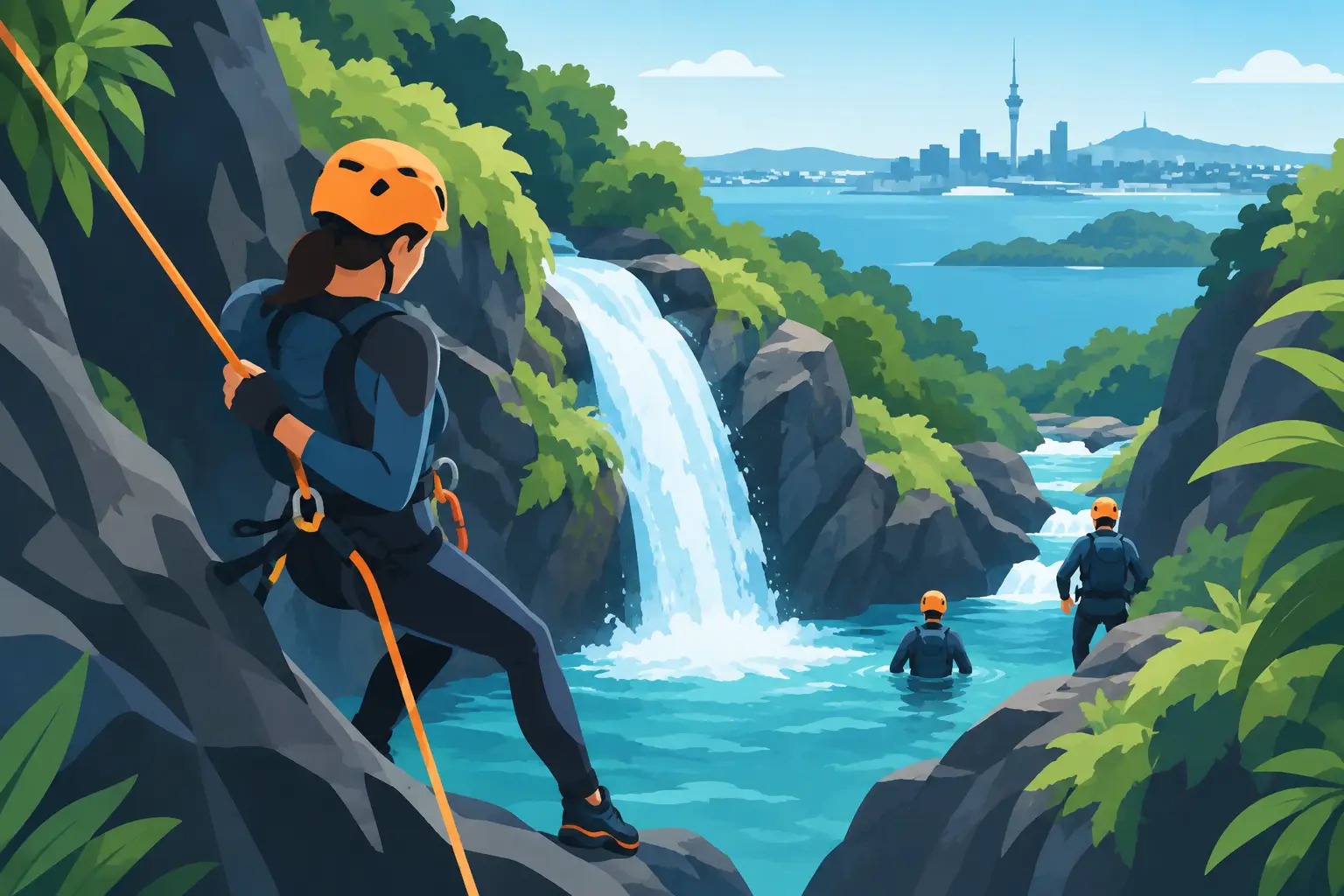
The first time you step backwards over a waterfall, your brain may have a very firm opinion about it. Then the rope takes your weight, the guide talks you through the next move, and suddenly you are abseiling through a rainforest gorge with water thundering past your boots. This canyoning first time guide is for anyone keen on that feeling but unsure what actually happens, what fitness you need, or whether you have the nerve.
Canyoning is not a polished, dry activity. You will scramble over rocks, wade through pools, slide through narrow sections and get properly wet. That is the point. With good instruction, the right equipment and a supportive crew, complete beginners can take on a big day out that feels wildly different from an ordinary walk or sightseeing trip.
What happens on your first canyoning trip?
A guided canyoning day starts before the canyon. You will meet your guides, get fitted with specialist gear and hear a clear safety briefing. This is where you learn the essentials: how to wear your harness, how to move safely on slippery ground, what the calls mean and how the abseil system works.
You do not need to arrive knowing knots, rope techniques or canyon commands. Your guides set up the ropes, demonstrate each obstacle and coach you one move at a time. Listen closely, ask questions early and take your time while learning. The aim is not to look experienced. The aim is to be present, follow the system and enjoy the challenge.
Then comes the approach. In the Waitākere Ranges, that can mean entering thick subtropical rainforest where the city feels a long way off, despite being close to Auckland. Once inside the gorge, the route unfolds in stages: rock scrambling, creek walking, waterfalls, pools, caves or confined passages, and abseils down rock faces shaped by years of flowing water.
Every canyon and every trip has its own character. A half-day introductory outing may concentrate on the key techniques and a few brilliant obstacles. A full-day adventure gives you more time in the water, more vertical action and the chance to tackle bigger features. Night canyoning changes the mood again, with the bush settling around you and glowworms adding a quiet bit of magic to the darkness.
Canyoning first time guide: choosing the right trip
Pick the trip for the experience you want, not the story you think you should be able to tell afterwards. If you are excited but nervous, a shorter introductory trip is a smart first move. You still get the cold-water buzz, the teamwork and the thrill of descending waterfalls, without committing to a full day of sustained activity.
Choose a full-day trip if you are reasonably active, happy to be outside for hours and want the full rainforest mission. Expect more walking, more obstacles and bigger moments. The reward is a proper sense of journey: you earn each section of canyon and finish with the kind of tired legs that make the post-trip snack feel deserved.
For a group, be honest about the least confident person rather than booking only for the loudest thrill-seeker. A great canyoning day is one where everyone is challenged at their level and comes away buzzing. Guides can usually offer alternatives at certain obstacles when conditions allow, but a canyon is a natural environment, not an adventure park. You should be ready for water, heights and instructions that need to be followed.
AWOL Canyoning Adventures runs guided options designed to take newcomers from curious to confident, with training and essential technical equipment included.
Do you need to be super fit or fearless?
No, but canyoning is physical. You need a sensible base level of mobility and stamina: walking on uneven tracks, stepping up and down rocks, using your hands for balance, swimming or floating when required, and staying active for the length of your chosen trip. If you have an injury, medical condition, limited swimming confidence or any concern about heights, raise it when you book. The best advice is specific to the route, weather and your circumstances.
Being nervous is normal. In fact, a little caution is useful. The difference between nerves and a bad day is often communication. Tell your guide if an abseil looks intimidating, if your boots feel awkward or if you do not understand a technique. They would far rather explain it twice than have you push on quietly.
You also do not have to leap from every ledge simply because someone else did. Jumps depend on water levels, the route and guide assessment, and they are never treated as a test of courage. Some features have alternatives. On the other hand, there are parts of canyoning where you must commit to the planned route, so choose an appropriate trip and arrive ready to give it a go.
What to wear and bring
Your operator should supply the specialist gear that keeps canyoning comfortable and functional in the water: typically a wetsuit, harness, helmet and canyoning footwear. These are not fashion choices. A wetsuit helps you stay warm, the helmet protects you around rock and waterfalls, and proper footwear gives better grip than trainers on wet terrain.
Bring swimwear to wear underneath, a towel and dry clothes for afterwards. A water bottle is useful before and after the canyon, and snacks or lunch may be needed depending on the trip length. Leave valuables behind where possible. Mobile phones, watches and loose jewellery do not mix well with deep pools, ropes and fast-moving water.
Do not wear cotton layers beneath a wetsuit if you can avoid it. They stay wet and cold. Keep your kit simple, follow the pre-trip information you receive and pack a warm layer for after the adventure. Even on a bright day, the gorge can feel cool.
Your first abseil: what it really feels like
Most first-timers are not worried about the walk. They are thinking about the abseil.
An abseil is a controlled descent on a rope. Your guide fits and checks your harness, connects the system, explains where to place your feet and shows you how to feed the rope through. At the top, the hard part is often leaning back and trusting the rope. Once your weight is in the system, it becomes much more manageable.
Keep your body position as instructed, take small deliberate steps and look where your guide tells you to look. Waterfall abseils can be loud, splashy and dramatic, so hand signals may be used when voices are hard to hear. You are not expected to be graceful. You are expected to stay steady and follow the coaching.
The moment you reach the pool or rock shelf below, you will probably want to turn around and see where you have just come from. That is when the confidence lands. One obstacle does not make you an expert, but it proves you can do more than your pre-canyon nerves suggested.
How to make the day better for everyone
Arrive on time, eat a decent meal beforehand and avoid turning up dehydrated from a late night. Canyoning needs energy and attention. Treat the safety briefing as part of the adventure, not the bit standing between you and the waterfalls.
In the canyon, move as a team. Wait where you are asked to wait, keep clear of rope areas, watch the person in front only when it is safe to do so and encourage your mates without pressuring them. The loudest cheer is often for someone who was terrified at the top and did it anyway.
Respect the rainforest too. These places are special because they are not built for crowds. Follow biosecurity instructions carefully, especially any footwear cleaning requirements designed to protect native bush. Take out what you take in, and leave the gorge looking as though your group never passed through.
Photos can be brilliant, but do not spend the whole day trying to capture proof of it. A guide or fellow adventurer may get the big shot. Your job is to feel the cold water, hear the falls and notice the moment your group stops being strangers and starts acting like a team.
Your first canyoning trip should leave you wet, knackered and grinning. Choose a trip that suits your confidence, trust the people who know the canyon, and give yourself permission to be nervous before you are brave.