
Guided Versus Self-Guided Canyoning Compared

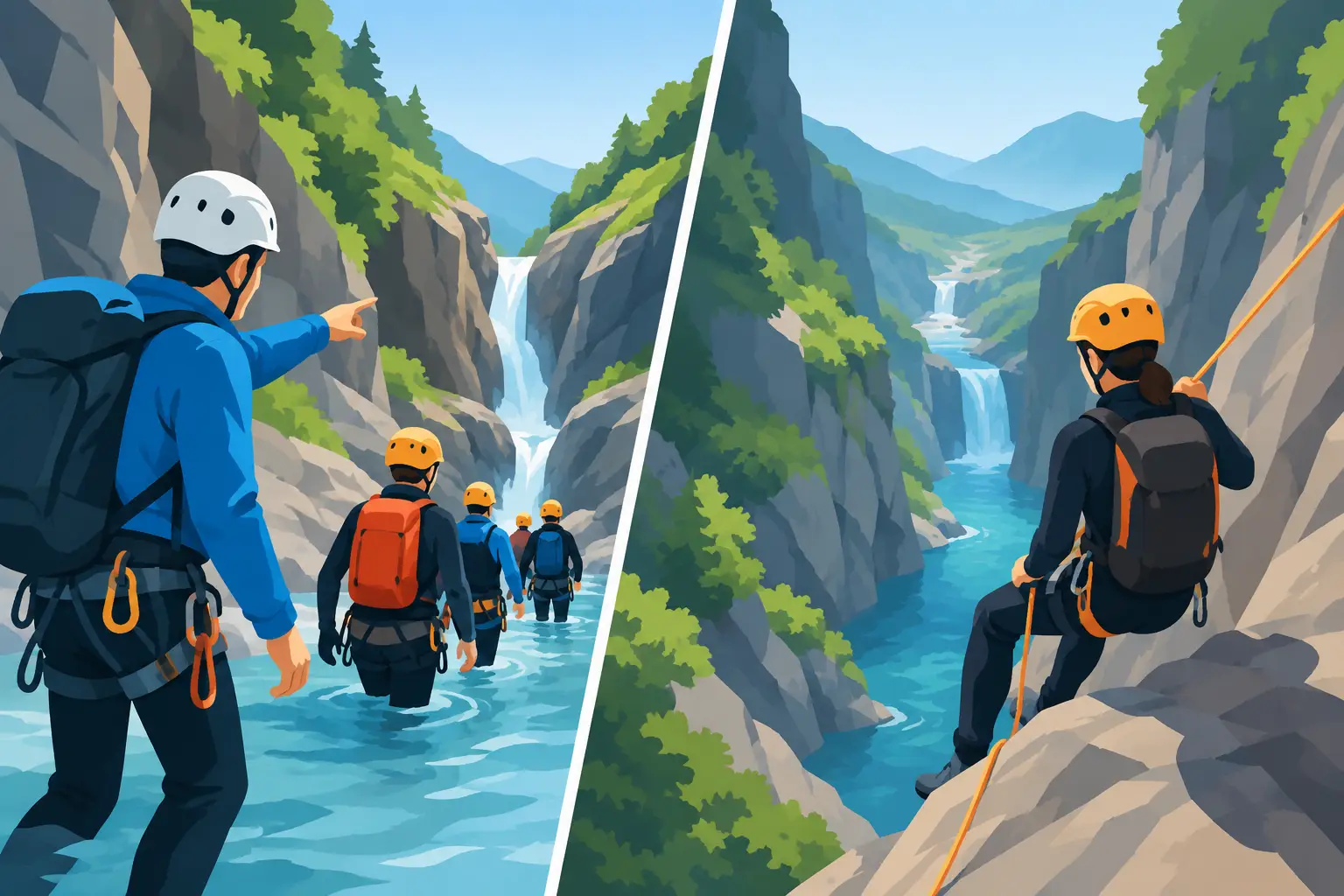
The difference between guided versus self-guided canyoning becomes very real when you are standing at the top of a waterfall, rain drumming on the trees and a rope disappearing over the edge. Canyoning is not just a bush walk with wet feet. It is a moving mix of abseils, slippery rock, cold water, changing weather and route-finding – and that is exactly why it is so much fun.
A self-guided day can offer freedom for people with solid technical experience. A guided trip gives more people a genuine shot at Auckland’s dramatic rainforest canyons, without needing to arrive with ropes, specialist kit or a lifetime of outdoor knowledge. Neither route is automatically better. The right choice depends on your skills, your group and what you want from the day.
Guided versus self-guided canyoning: the real difference
The biggest difference is not whether somebody else carries the rope. It is responsibility. On a guided canyoning trip, a qualified guide assesses conditions, sets up technical systems, teaches the required techniques and keeps the group moving safely through the gorge. You can concentrate on the buzz of the descent, the waterfall crashing beside you and the brilliant feeling of doing something that initially looked impossible.
On a self-guided trip, your group takes on every one of those jobs. That includes choosing a suitable route, checking access, reading the weather, carrying the right equipment, judging water levels, building anchors, managing ropes and making decisions if someone becomes tired, nervous or injured. For a capable, experienced team, that responsibility can be part of the appeal. For first-timers, it can turn an epic day out into an avoidable problem.
Canyons are deceptive. A route that feels straightforward in dry weather can become much more serious after rainfall. Water hides footholds, changes the force at the bottom of a descent and makes simple communication difficult. A map may show where a gorge goes, but it does not tell you whether an anchor is in good condition or how your group will handle a long abseil in flowing water.
What a guide brings to the canyon
A great guide does more than point downhill and say, “Your turn.” They turn a demanding environment into an achievable adventure. Before the action starts, participants learn how to use the equipment, how to move around slippery terrain and what to expect at each obstacle. That training matters because it gives nervous beginners a clear job to focus on.
At an abseil, guides manage the rope systems and coach each person through their first steps backwards over the edge. At jumps, slides and narrow sections, they choose appropriate lines and explain the safest way to move. They also know when to change the plan. If conditions shift, a guide has the local knowledge and judgement to make a smart call early rather than hoping things improve deeper in the canyon.
There is another benefit that is easy to overlook: a guide lets the group be a group. Friends can encourage one another, laugh at the faces made under a waterfall and enjoy the photos, rather than splitting their attention between fun and technical tasks. That makes guided canyoning especially good for mixed-ability groups, visitors on a tight schedule, stag and hen groups, families with active older teens and workplace teams.
With AWOL Canyoning Adventures, the experience also includes the gear and instruction needed for the trip. That removes a major barrier for people who want the big abseils and rainforest scenery without buying specialist equipment for one adventure.
Safety is active, not passive
A guide cannot remove every challenge from canyoning – nor should they. The challenge is the point. What organised guiding does is put the right structure around it: appropriate equipment, clear briefings, close supervision and decisions based on current conditions rather than optimism.
You still get wet. You still step backwards into space. You still earn the grin at the bottom. The difference is that you have skilled support around the moments that demand it.
When self-guided canyoning makes sense
Self-guided canyoning can be rewarding for people who already have the right experience and a dependable team. This does not mean being generally fit, having done a few high ropes courses or feeling confident around water. It means being competent with canyon-specific rope work, abseiling, anchors, rescue procedures, route planning and dynamic water hazards.
The group also needs suitable equipment, including properly maintained ropes, harnesses, helmets, thermal protection, footwear and emergency gear. Just as importantly, everybody needs to know how to use it. One highly experienced person cannot safely carry the full technical burden for a group of keen but untrained mates.
Self-guiding may suit you if you have built those skills through training and previous canyon experience, can turn back without ego when conditions are wrong, and have planned conservatively. It also suits people who genuinely enjoy the preparation. Studying a route, checking forecasts, packing systems and solving small problems as a team are part of the satisfaction.
But freedom comes with a cost. You spend more time organising, carry more responsibility and need to accept that the best decision may be cancelling the trip. A canyon will still be there another day.
The gear question is bigger than a harness
Hiring or owning a harness is not the same as being equipped for canyoning. Technical kit works as a system. Rope length must suit the route. Clothing needs to keep you warm in cold water. Footwear needs grip on wet rock. Helmets must fit correctly. Emergency equipment needs to be accessible and understood, not buried at the bottom of a dry bag.
Then there is the less glamorous side: transporting wet kit, inspecting equipment after use, drying it properly and replacing it when it is worn. Guided trips remove that hassle. You arrive ready for adventure, get fitted with the required gear and leave the technical packing list to people who use it every day.
For a one-off birthday surprise or a holiday highlight near Auckland, that is often the sensible trade-off. You get the full canyon experience without turning your spare room into a drying shed of neoprene and rope.
Local access and respect for the rainforest
Canyoning takes place in environments that are both tough and fragile. Access can change, tracks can be affected by weather, and restrictions may exist to protect the land, waterways and native forest. Responsible canyoners check before they go and follow current access requirements rather than relying on an old social media post or a friend’s memory.
Guides who work in a region regularly bring practical local awareness: where to park, how to approach respectfully, how to avoid damaging sensitive areas and what conditions have been like recently. They can also bring the place to life, sharing the stories behind the landscape rather than treating the rainforest as a backdrop for a quick adrenaline hit.
Whether guided or independent, keep your impact light. Take everything out, avoid disturbing wildlife, stick to permitted access and clean gear properly where biosecurity guidance requires it. The best canyoning days leave you with huge memories, not a heavier footprint.
Choose the experience you actually want
If your ideal day is learning new skills, tackling waterfalls with expert coaching and sharing the excitement with your whole crew, choose guided canyoning. It is the fast route to a high-impact adventure, even if you have never worn a harness before.
If you are an experienced canyoner with trained companions, proven systems and a careful approach to conditions, self-guiding can offer a different kind of reward. You are not simply doing the route. You are planning, leading and owning every decision along the way.
There is no prize for choosing the harder logistical option. Pick the version that lets you enjoy the canyon with confidence, respect the environment and finish the day already talking about who is brave enough to come next time.