
How Guides Manage Canyoning Risk on Every Trip

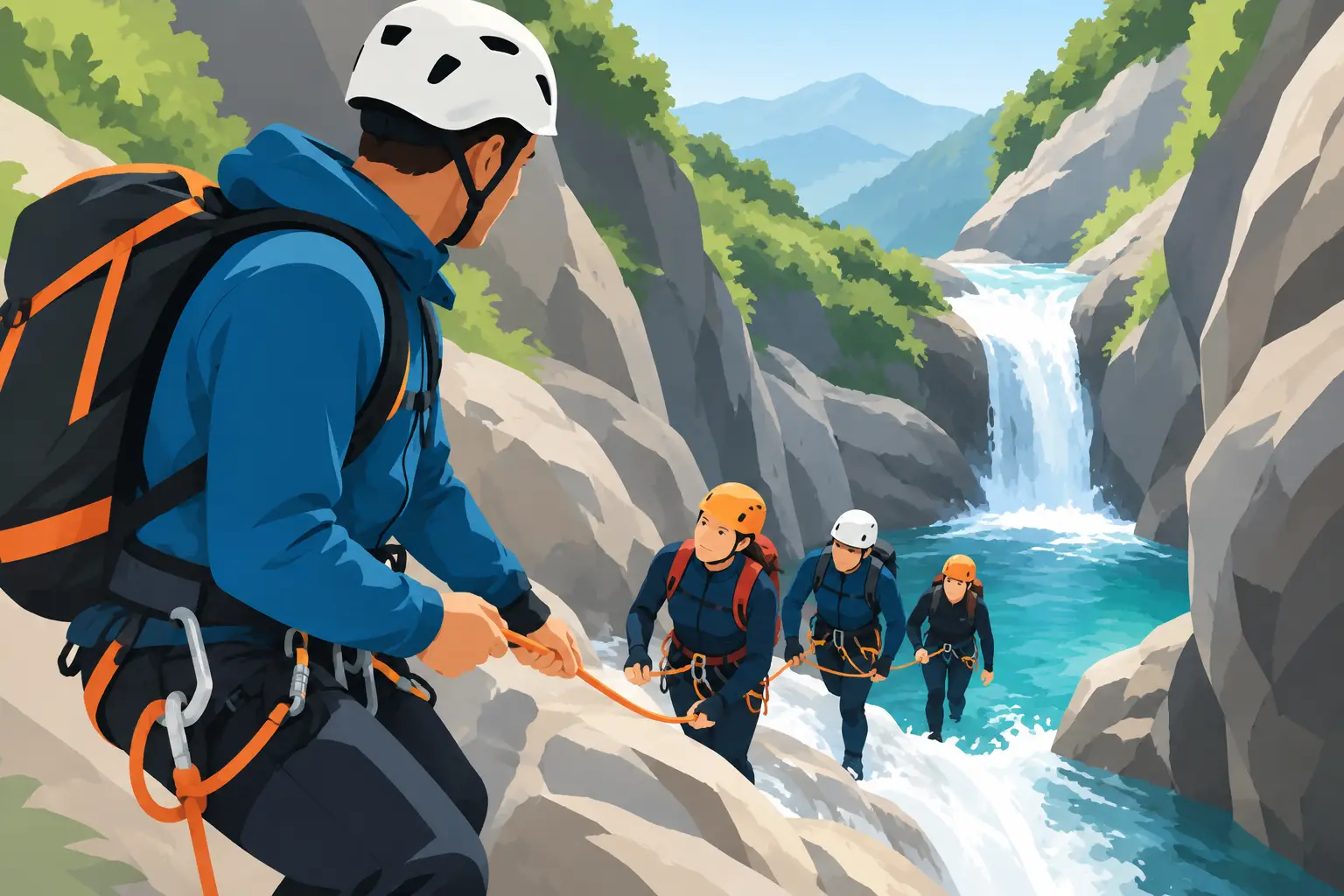
A waterfall can look like pure fun from the edge: rainforest all around, cold clear water below and a proper story waiting for the group chat. But how guides manage canyoning risk is what makes that big abseil, jump or narrow gorge feel exciting without asking you to gamble on it. Great guiding does not remove every challenge from a canyon. It identifies the real hazards, builds solid margins around them and makes smart calls before they become a problem.
How guides manage canyoning risk before anyone gets wet
The most useful safety decision often happens before the group leaves the city. Canyons change quickly. Rainfall upstream can raise water levels, increase flow and make normally straightforward sections far more powerful. A route that suits a first-timer on one day may not suit the same group after heavy rain.
Guides assess current and recent weather, water conditions, forecasts and the condition of tracks and access points. They also consider the trip itself: its length, technical features, the group size and the experience of the people booked on it. If conditions do not stack up, the plan changes. That might mean selecting a more suitable route, adjusting the day’s programme, waiting for better conditions or cancelling.
That is not a disappointing extra layer of caution. It is professional canyoning. The aim is not to force the original plan through at all costs. The aim is to get the group into terrain that is exciting, appropriate and manageable on the day.
In the Waitākere rainforest, this judgement matters. Wet rock, steep approaches and fast-changing weather are part of the appeal, but they demand respect. Local knowledge helps guides understand how a particular gorge responds to rain, where water collects, which exits are practical and when it is time to turn around.
The right trip starts with the right people
Canyoning trips are not one-size-fits-all. A keen first-timer who is comfortable in water may thrive on a half-day introduction, while a group looking for Auckland’s biggest abseils needs more time, commitment and confidence. Guides manage risk by matching the experience to the people in front of them, not just to a booking description.
Before the action begins, guides check relevant details such as swimming confidence, injuries, medical considerations and any worries around heights, enclosed spaces or cold water. This is not about judging anyone. It gives the guide a clear picture of where extra coaching, reassurance or a different option may be needed.
Fitness matters too, although it is rarely about being the fastest person in the group. Canyoning involves walking on uneven ground, scrambling, getting in and out of water, following instructions and staying engaged for the full trip. If someone is unsure, honest communication early on is far more useful than bravado at the top of a waterfall.
Small groups and steady pacing
A guide needs to see what is happening. Keeping groups to a workable size allows for individual coaching, careful supervision at obstacles and regular checks that everyone is warm, comfortable and coping well. The strongest member of a group does not set the pace. The group moves at a pace that keeps the whole team together and leaves enough energy for the sections ahead.
This is also why canyoning is such a good shared adventure. You cheer mates through a first abseil, wait while someone gets the rope technique right and celebrate when the whole crew reaches the pool below. Moving as a team is not just good fun. It is part of good risk management.
Training turns nerves into useful skills
Nobody is expected to arrive knowing how to abseil down a waterfall. Before heading into technical terrain, guides explain the equipment, demonstrate the method and give participants the chance to practise. Clear instruction makes a real difference when the setting becomes louder, wetter and more dramatic.
For an abseil, that means learning how to position your body, control the rope, keep a safe hand position and listen for simple commands. At jumps, guides explain the landing area, entry position and whether a jump is optional or unsuitable for that moment. In moving water, the group learns how to travel deliberately, where to place feet and why keeping space between people matters.
The best briefing is not a long lecture. It is a clear explanation at the right time, followed by a demonstration, a go at it and calm correction if needed. Guides repeat key points before each major obstacle because the conditions and consequences can change from one feature to the next.
Asking questions is always a good move. So is saying, “I’m not sure about this one.” A professional guide would rather help you work through a concern at the top than discover it halfway down. Confidence grows from having a plan, practising the skill and knowing somebody experienced is watching your technique.
Gear is chosen for the canyon, not the photo
A helmet, wetsuit, harness and technical rope systems all have a job to do. Properly fitted equipment protects participants, provides warmth and gives guides the tools to manage steep or slippery terrain. It also needs checking before use and throughout the day.
Guides inspect equipment, make sure harnesses and helmets fit correctly, and explain how to use each item. Ropes and anchor systems are set up for the specific obstacle, with attention to wear, water flow, rope length and how the group will move safely through the section. Participants do not need to become rope technicians, but they do need to understand the parts of the system they are using.
There is a trade-off here. More equipment does not automatically make an adventure safer if it is poorly fitted, unfamiliar or used without a process. Good guiding keeps the system practical: suitable gear, clear checks and simple instructions that people can remember when the adrenaline starts buzzing.
Guides read the canyon all day
The pre-trip assessment is only the start. Canyoning risk management is active. Guides continually watch the weather, water, rock conditions, group energy and the way individuals respond to each challenge.
A guide may notice that a pool is colder than expected, that a participant is tiring, or that the water sounds and moves differently after rain. They may change the order people tackle an obstacle, add a safety line, choose a different descent method or slow the group down. These decisions can look effortless from the outside because the guide has already processed a lot of information.
Communication stays simple and direct. One person moves while others wait in a safe position. The group knows where to stand, when to start and who is responsible for the next step. In noisy waterfalls, hand signals and visual contact become especially useful. Everyone should be able to focus on the task in front of them rather than guessing what is happening.
When the answer is no
Adventure has a funny way of making people want to prove themselves. But a jump may be skipped, a route may be shortened or an abseil may be adjusted if conditions or capability call for it. Saying no to one feature is not failing the trip. It is making sure the rest of the day remains awesome fun.
This applies to guides as much as guests. A well-run trip has options and contingency plans, but it also has firm limits. If the canyon is not operating within those limits, the guide acts early. That judgement is one of the biggest reasons guided canyoning is a different proposition from heading into unfamiliar terrain alone.
Emergency readiness sits behind the scenes
Nobody joins a canyoning day hoping to talk about emergencies, yet preparation is a core part of the job. Guides carry appropriate first-aid and communication equipment, know access and exit routes, and have plans for incidents ranging from a minor slip to a participant needing help out of the canyon.
More importantly, guides work to prevent a small issue becoming a bigger one. Keeping people warm, hydrated and together matters. So does spotting fatigue, making conservative decisions and maintaining control at every technical feature. Prevention is less dramatic than a rescue, but it is the skill you want leading your group.
At AWOL Canyoning Adventures, the goal is to give newcomers and seasoned adventurers a real rainforest mission – waterfalls, caves, gorge swims and all – with the training, equipment and leadership to take on the challenge well.
Your part in a safer, better canyon day
Guides lead the technical side, but participants help shape the day. Arrive ready to listen, tell your guide about relevant injuries or concerns, wear the kit as instructed and speak up if something does not feel right. Save the hero moves for the photos afterwards.
The reward is a bigger kind of confidence. You do not need to own specialist gear or turn up as an expert to feel the buzz of descending beside a waterfall. Bring a willing attitude, look after your mates and trust the process. The canyon will still feel wild – you will simply be ready to enjoy every brilliant second of it.