Corporate Canyoning Outcomes That Last Beyond the Day

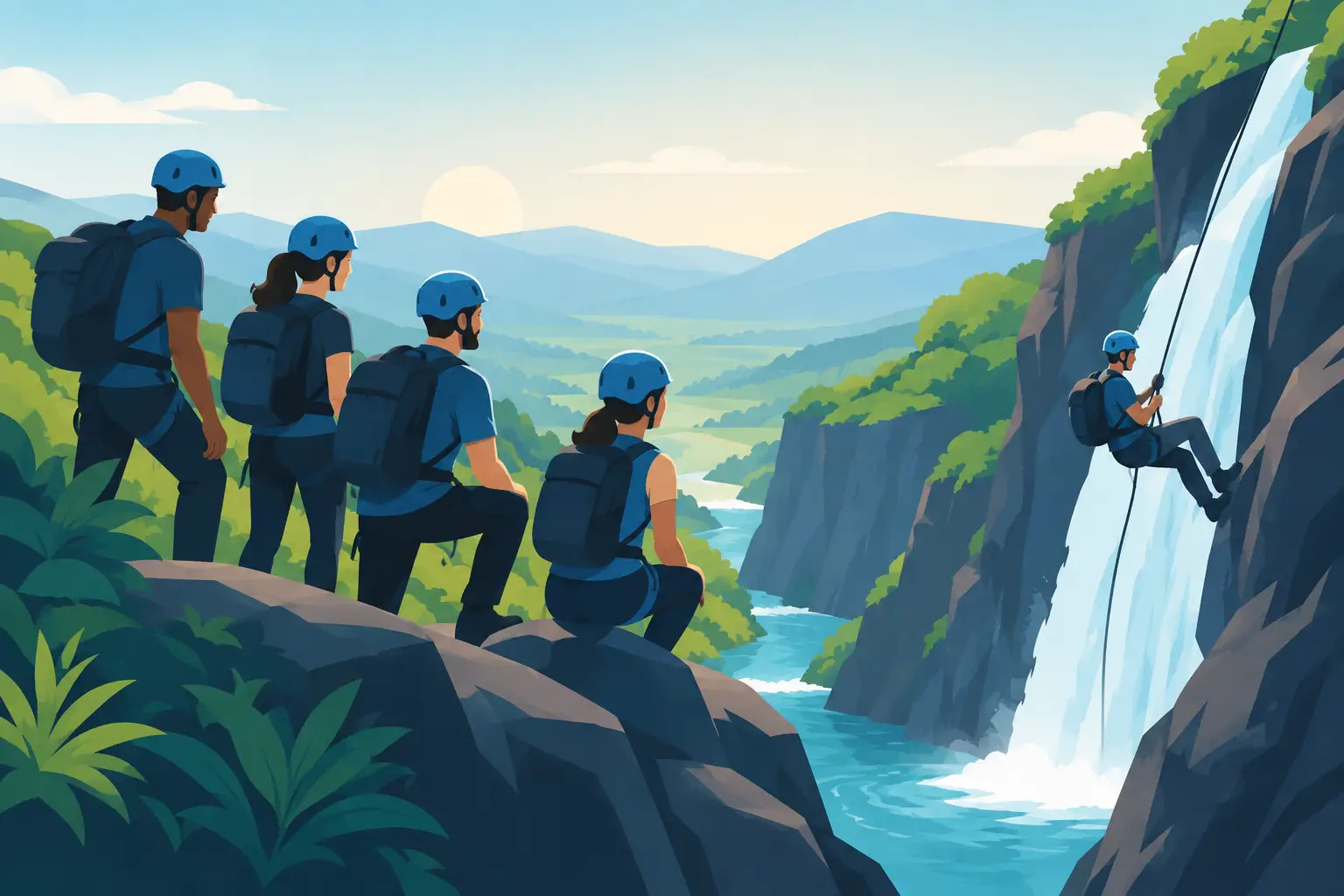
At the top of an abseil, job titles go quiet. The person who normally leads the meeting may be waiting for encouragement; the quiet colleague might be the first to step backwards over the edge with a grin. That is where meaningful corporate canyoning outcomes begin: not in a boardroom exercise, but in the honest moments when a team has to listen, communicate and back each other.
A corporate day in a rainforest canyon should still be seriously good fun. Expect waterfalls, scrambling, jumps, narrow rocky passages and proper moments of adrenaline. But when the experience is well planned, the laughs and big photos are only part of what teams take back to work.
Corporate canyoning outcomes are earned, not handed out
No activity magically fixes poor communication or turns a disconnected department into best mates by lunchtime. Canyoning creates the conditions for better conversations and stronger relationships because the group is sharing something unfamiliar, physical and memorable together.
In the canyon, people have to pay attention. They listen to a guide’s instructions, check in with a teammate, wait their turn and make clear decisions when the water is loud and the terrain is changing. The challenge is real, but it is managed. Everyone receives the training and technical equipment they need before heading into the action, so complete beginners can get involved without pretending to be outdoor experts.
That balance matters. If a corporate event is too easy, it can feel like another social outing with branded caps. If it is too intimidating, some people disengage before the day gets going. Guided canyoning sits in the sweet spot: enough edge to create a shared achievement, with the structure, coaching and options that allow people to take part at their own pace.
The outcome is not that every participant suddenly loves heights. It is that the team sees how people respond to uncertainty, support and challenge. Those observations tend to be far more useful than a personality quiz.
What teams actually bring back from the canyon
The strongest result is usually a fresh sense of connection. Colleagues who might only know each other through video calls, project updates or a quick kitchen chat have spent a day navigating a gorge, cheering an abseil and sharing the buzz after a cold-water jump. It gives them a common reference point that lasts well beyond the coach ride home.
Trust grows in small, visible ways. Someone checks a harness. Someone talks a nervous teammate through the first few steps. Someone waits at the bottom of a waterfall to celebrate another person’s win. These are not grand gestures, but they build a practical feeling that people are looking out for one another.
Communication also becomes sharper. In canyoning, vague instructions are no use. Teams learn to speak clearly, confirm what they have heard and adapt when the plan changes. There is a useful parallel with work, but there is no need to force it. Let the experience do some of the talking.
Confidence is another powerful outcome, especially for people who arrive convinced they are not ‘outdoorsy’. Completing an abseil or moving through a section they initially found daunting can change how someone sees their own capability. That confidence will not solve every workplace challenge, but it can make a person more willing to speak up, volunteer an idea or take on something unfamiliar.
There is also the simple value of proper fun. A team that has laughed hard together often returns with more warmth and patience for one another. That matters when deadlines tighten and the easy answers run out.
The moments leaders notice
Outdoor challenge brings different strengths into view. The loudest person is not always the calmest under pressure. The newest team member may naturally help others feel included. A colleague who rarely speaks in meetings may be excellent at noticing detail and giving steady reassurance.
For managers, this should be an opportunity to observe, not judge. The canyon is not an assessment centre. Nobody needs to be labelled brave, hesitant, capable or otherwise based on one day outdoors. Instead, notice the behaviours worth encouraging back at work: patience, good listening, composure, humour, practical support and the ability to ask for help.
How to design a day with better corporate canyoning outcomes
Start with the reason for getting the group together. Is the team celebrating a huge year? Bringing new starters into the fold? Reconnecting after a period of change? Rewarding people who have put in the hard yards? The answer will shape the right trip and the right pace.
A high-energy team looking for a major shared challenge may be ready for a full day of rainforest canyoning, with big abseils and more time in the gorge. A mixed group, or a team with limited time, may get more from a shorter introduction that still delivers waterfalls, challenge and a proper sense of adventure. Night canyoning can suit groups after something genuinely different, with glowworms and the rainforest taking on a completely new feel after dark.
Be clear in the invitation. Tell people what the day involves, what is provided and what they need to bring. Explain that no previous canyoning experience is needed, but avoid overselling it as a gentle stroll. The best turnout comes when people know there will be wet feet, physical activity and a few nerves, alongside professional guidance and a team that will look after them.
It also pays to protect the social time around the adventure. The best corporate days are not packed so tightly that the group rushes from car park to canyon to pub without catching its breath. Give people space before and after the trip to chat, compare favourite moments and hear the stories that will grow taller by Monday morning.
AWOL Canyoning Adventures can build customised team events around canyoning, adventure racing and rogaines, which is useful when a group wants more problem-solving alongside the water-based action. The right format depends on fitness levels, group size, available time and whether the day is primarily a reward, a connection point or a bigger team development experience.
Keep inclusion practical, not performative
A corporate adventure only works if people feel invited to take part. That does not mean removing every challenge. It means giving people accurate information, proper instruction and the chance to work through nerves without being rushed or mocked.
Before booking, ask participants about swimming confidence, relevant injuries, mobility needs and anything else that could affect their day. A good operator can advise on suitability and help choose the most appropriate experience. Leaders should make it clear that nobody has to prove anything. Encouragement is brilliant; pressure is not.
Consider the group’s wider circumstances too. If people are travelling from different places, optional transport from central Auckland can make the day easier and more social from the start. If the team includes both regular trail runners and people who spend most weekends on the sofa, choose an experience that lets everyone feel stretched without making anyone feel left behind.
Environmental care belongs in the outcome as well. The Waitākere Ranges are not an outdoor playground without limits. Guided access, cleaning footwear and following local track and biosecurity requirements help protect the rainforest that makes the experience possible. Teams often value this more than expected. A day outside can be a strong reminder that shared places need shared responsibility.
Make the return to work count
The easiest way to lose the value of a corporate adventure is to treat it as a one-off expense and never mention it again. You do not need a lengthy debrief with sticky notes. A few good questions over lunch, at the next team meeting or during the journey home can keep the experience alive.
Ask what surprised people, when they felt most supported and what helped them push through a nervous moment. Ask what the team did well when things became unfamiliar. Then keep the answers practical. Perhaps it is clearer check-ins during busy projects, more recognition for quiet contributors or a better habit of asking for support early.
The best corporate canyoning outcomes are not measured by how wet everyone gets, although they will get wet. They show up later, when colleagues recognise one another as people who have shared a challenge, had a laugh and made it through together. Choose the right level of adventure, bring an open-minded team and let the canyon give them something worth talking about.