
How to Plan Group Canyoning Without the Chaos

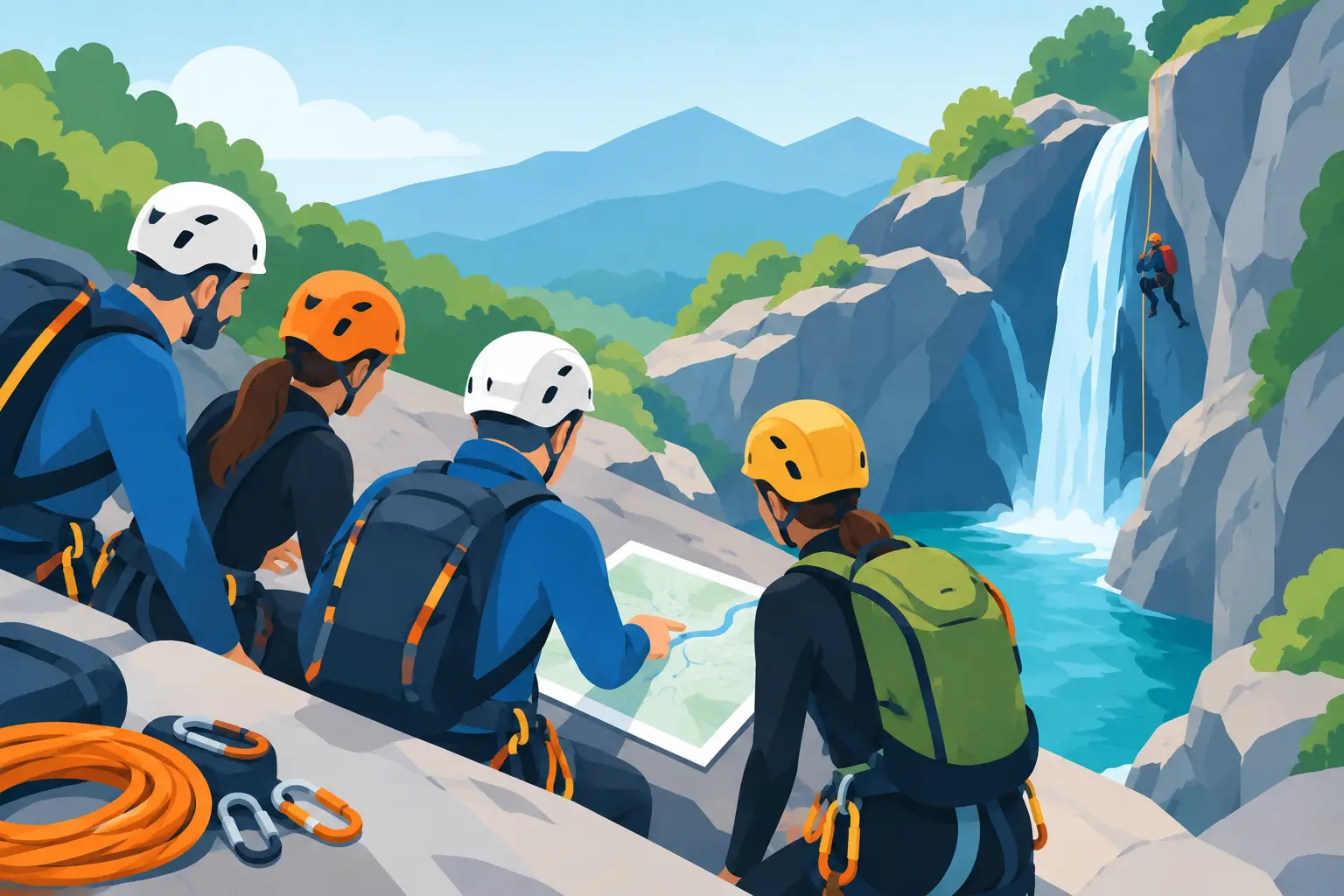
The best group days are not the ones spent arguing in a car park about who forgot their shoes. They are the ones where everyone is clipped in, laughing under a waterfall and feeling brave enough to take the next step. Knowing how to plan group canyoning means getting the practical stuff sorted early, then leaving room for the big moments: abseils, jumps, caves, rainforest and the kind of stories that grow with every retelling.
A guided canyoning trip makes a challenging day in the bush achievable for mixed groups, including people who have never worn a harness before. But the right trip, group size and pre-trip message can make the difference between a good booking and an absolutely epic day out.
How to plan group canyoning around your people
Start with the people, not the most dramatic photo. A canyoning trip can involve walking on uneven tracks, scrambling over rocks, swimming through pools, descending waterfalls and being out in changeable weather. That is exactly why it is such an awesome group experience, but it also means you need an honest read on your crew.
Ask who is genuinely keen for a physical outdoor day and who may be nervous about heights, water or fitness. You do not need a group of elite athletes. Complete beginners can have a brilliant time with professional instruction, the right equipment and a supportive guide. What matters is that everyone understands the activity involves effort, getting wet and stepping outside their comfort zone.
For a group with varied confidence levels, choose an introductory or half-day experience rather than assuming bigger is always better. A full-day canyoning adventure gives you more time in the gorge and more major features, but it suits people who are ready for a solid day of movement and adventure. A shorter format can be the smarter call for families, first-timers, a tight itinerary or a group that wants a high-energy taste of canyoning without committing the entire day.
If your group is planning a celebration, be clear about the mood you want. A stag or hen group may want action and big laughs, while a corporate team may be looking for a shared challenge that brings people together without leaving anyone behind. Schools and youth groups may need an experience that supports learning around risk, communication and resilience. The canyon can deliver all of that, but the trip needs to fit the group.
Choose a date with some breathing room
Canyoning happens in a living landscape, not an indoor attraction. Rainforest conditions, water levels and weather all play a part in how a day runs. Choose a date when your group is not rushing straight from the canyon to a flight, dinner reservation or another immovable commitment.
For visitors to Auckland, allowing a little flexibility is especially useful. The Waitākere Ranges feel a long way from the city once you are under the canopy, beside a waterfall or working down a gorge, but travel time still needs to be factored in. If optional transport from central Auckland is available, it can make logistics far easier, particularly when nobody wants to organise vehicles after a wet, full-on day.
Book early if your group is large, travelling during a busy holiday period or trying to lock in a weekend. Early planning gives you more choice over trip type and start time. It also gives every participant time to check the requirements, arrange clothing and flag any concerns before the day arrives.
Set expectations before anyone turns up
The group organiser’s most useful job is not chasing payments. It is making sure nobody arrives expecting a gentle bush walk and gets surprised by a wetsuit, a rope and a waterfall.
Send one simple message to everyone well before the trip. Explain the broad plan, meeting time, duration, transport arrangements and what the activity includes. Let them know they will get wet, may need to swim, and will be moving over natural terrain. Mention that canyoning is guided and that technical equipment and training are provided, so newcomers do not need to own specialist kit or know how to abseil beforehand.
It is also worth being direct about personal responsibility. Participants should disclose medical conditions, injuries, severe allergies, pregnancy or anything else that could affect safe participation. Encourage people to speak up rather than pushing through quietly. A good adventure is challenging, not a competition to ignore limits.
For a group of friends, appoint one organiser but do not make them carry every detail alone. Use a group chat for reminders, attendance updates and transport coordination. Ask for firm numbers by the operator’s deadline. Canyoning places are not like restaurant seats – guide ratios, equipment sizing and safety planning all depend on knowing who is coming.
Get the gear plan right
One of the biggest advantages of a guided canyoning day is that the specialist gear is supplied. Helmets, harnesses, wetsuits and the technical equipment needed for canyon travel are there to help you enjoy the action without a costly shopping list.
Your group still needs to bring the personal basics. Exact requirements can vary by trip and season, so follow the pre-trip information you receive. In general, participants should expect to need swimwear for under a wetsuit, a towel, and dry clothes for afterwards. A warm layer for before or after the canyon is a good call, particularly on cooler days. Do not turn up in your favourite trainers if they are likely to be soaked and scuffed.
Leave jewellery and valuables behind where possible. Secure glasses if they are essential. Bring any personal medication in a way that can be kept safe and accessible. If someone relies on a particular snack for energy, ask in advance whether it is appropriate to bring it and how it can be carried.
The goal is not to overpack. It is to arrive prepared enough that your attention stays on the next waterfall, not on cold toes or a missing towel.
Build confidence without talking down the challenge
First-timers often worry most about abseiling. That is normal. The first moment of leaning back on a rope beside a waterfall can feel enormous, even for confident people. The value of guided canyoning is that participants are shown what to do, fitted with the correct equipment and supported through each stage.
As the organiser, avoid telling nervous friends, “It is easy.” It may not feel easy to them, and that wording can make people feel silly for being apprehensive. Try, “You will be taught what to do, and the guides will talk you through it.” That is reassuring, accurate and confidence-building.
The same goes for jumps and swims. Depending on the route and conditions, there may be choices around particular features. Nobody should feel pressured into proving themselves for the group photo. The strongest group energy comes from cheering people on, respecting boundaries and celebrating every win, whether that is a huge abseil or simply getting into the water for the first time.
Match the trip to the occasion
A group canyoning booking works best when the day has a clear purpose. For a birthday, it can replace the usual dinner with an experience nobody forgets. For a workplace team, it creates natural opportunities for encouragement, problem-solving and seeing colleagues in a completely different setting. For visiting friends, it is a proper escape into rainforest terrain without needing weeks of outdoor training.
Night canyoning adds a different kind of buzz. Moving through the bush after dark, with glowworms and the sound of water around you, is not simply the daytime trip with less light. It is a more atmospheric option for groups who want something unusual and are happy with a later finish.
At AWOL Canyoning Adventures, groups can choose from shorter introductions, full-day rainforest challenges, night experiences and tailored events. The right option depends on your time, confidence levels and what you want everyone to remember when they are back in dry clothes.
Respect the place that makes the adventure possible
The rainforest is not a backdrop for a quick adrenaline hit. It is a sensitive environment with its own tracks, waterways, plants and wildlife. Follow guide instructions closely, stay where you are asked to stay and clean footwear when required to help protect the forest from kauri dieback.
Small decisions matter. Do not leave food wrappers, bottles or spare clothing behind. Keep noise sensible when asked, particularly around access areas. A canyoning day should leave your group with muddy grins and great photos, not a trace in the bush.
When the date is set, the group is informed and everyone knows the plan, stop overthinking it. Get the crew together, bring a good attitude and let the canyon do the rest. The waterfall is waiting.