
Can Canyoning Run in Rain? What to Expect

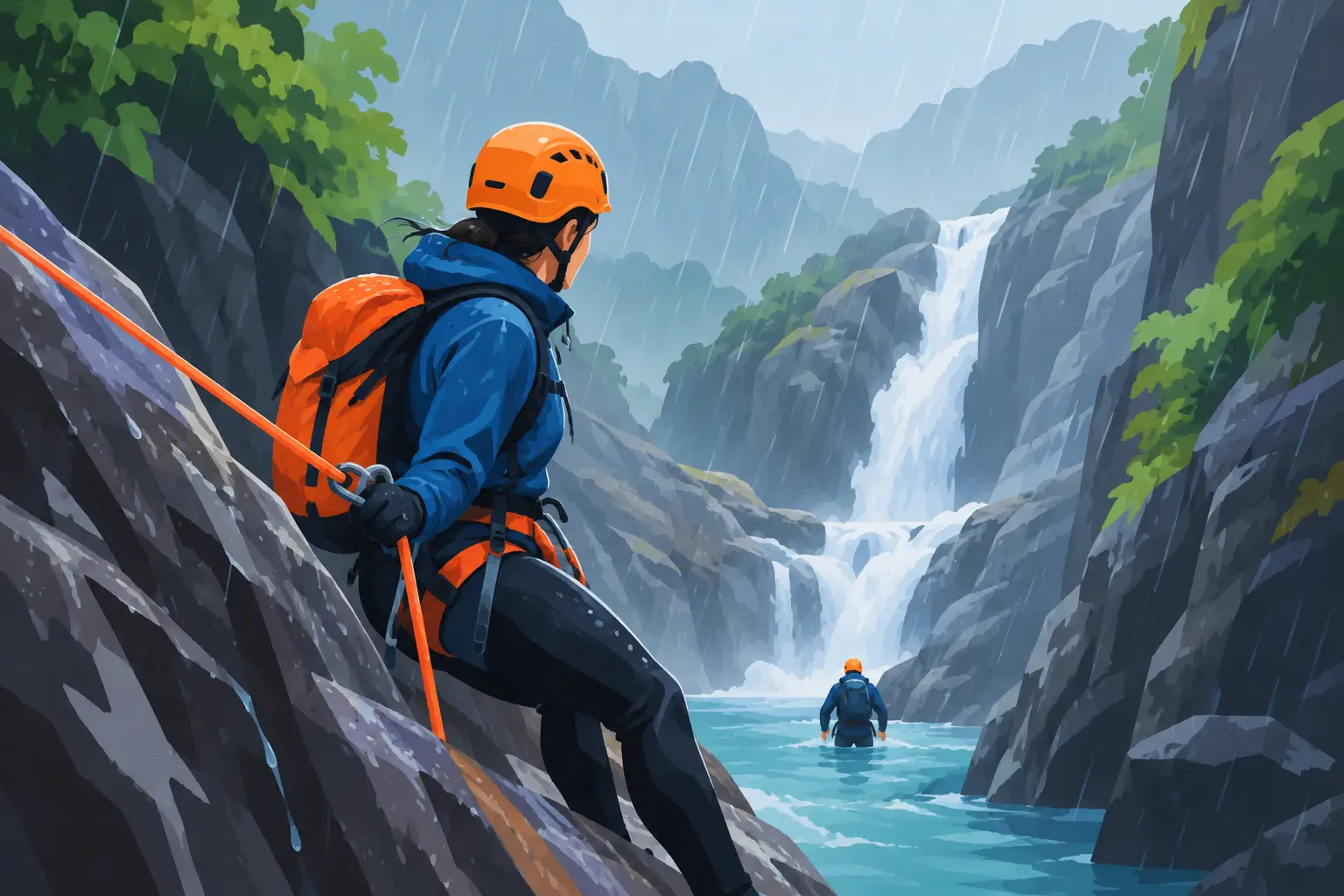
Rain drumming on the rainforest canopy can make a canyoning day feel even more wild. But can canyoning run in rain? Sometimes, yes – and sometimes the right call is to change plans, wait, or cancel. The difference comes down to the canyon, recent weather, water levels and the judgement of the guides on the day.
Canyoning is already a wet adventure. You are moving through waterfalls, pools, narrow gorges and flowing water, so a bit of rain is not automatically a problem. In fact, light rain can add to the atmosphere: mist hanging in the bush, waterfalls roaring overhead and that proper rainforest feeling you came for.
What matters is not whether raindrops are falling when you pull on your wetsuit. It is whether the water is behaving safely and predictably.
Can canyoning run in rain? Yes, but conditions decide
A professionally guided trip does not operate on a simple rain-or-no-rain rule. Guides assess the whole picture before entering a canyon and keep reassessing it while the group is out there.
Light or steady rain may be manageable in some locations, particularly when water levels are low and the forecast is stable. Heavy rain, prolonged rainfall, thunderstorms, or rain falling across a large catchment can change a canyon fast. Water can rise, currents can strengthen, waterfalls can become harder to approach, and exits can take longer.
That is why a canyon that feels friendly one morning may not be suitable by the afternoon. The call is never about making the trip look dramatic or pushing through because everyone has arrived ready for an adventure. It is about choosing the conditions in which the adventure stays fun.
At AWOL Canyoning Adventures, guides know the Piha rainforest terrain and make decisions based on local conditions, not just a weather app viewed over breakfast. If a route is not right, the team may adjust the plan, select a more suitable option where possible, delay the start, or call it off. That can be disappointing, but it is also exactly what good guiding looks like.
Why rain changes a canyon so quickly
A canyon collects water. Rain that falls higher up in the catchment may reach the gorge after you have started, even if the sky above your group has begun to clear. This is one reason canyoning decisions need local knowledge and active monitoring.
Water level and flow matter more than getting wet
Higher water makes everything more physical. A pool that is normally calm may have a stronger current. A straightforward crossing can demand more control. Waterfall lines and landing areas can look and feel different from the ones guides expect in normal flow.
Fast-moving water also reduces options. Guides need enough margin to manage each person carefully, set up safe abseils, communicate clearly and keep the group moving at the right pace. If those margins shrink, the sensible move is not to carry on regardless.
Visibility and footing can change
Rain can make rocks slicker, obscure footholds and make it harder to hear instructions over running water. In a lush rainforest canyon, leaf litter and mud can also affect tracks leading in and out.
This does not mean wet terrain is automatically off limits. Canyoning guides expect wet surfaces and teach you how to move deliberately, where to place your feet and how to use the equipment properly. It does mean that a trip needs to match the conditions and the group.
Thunderstorms are a different category
Thunder and lightning are a clear reason to avoid exposed watercourses, waterfalls and steep terrain. A storm forecast is not something to shrug off because the canyon is sheltered by trees. Your guides will treat electrical activity and rapidly changing weather seriously.
What a rainy canyoning day actually feels like
For many first-timers, the idea of rain sounds miserable until they realise they were going to get soaked anyway. Once you are in a wetsuit and moving through the canyon, the weather often becomes part of the story rather than the main event.
A safe wet-weather trip can feel brilliantly atmospheric. The bush smells sharper, the waterfalls have more punch, and the canyon feels like a hidden world only a short distance from Auckland. You will still be learning to abseil, wading through pools, tackling natural obstacles and sharing plenty of laughs with your group.
There are trade-offs. Rain can mean a slower pace, less time standing around between features and a route that is different from the original plan. You may also feel colder if you stop moving, especially on a full-day experience. Listen to your guide, eat and drink when advised, and tell them early if you are feeling chilled, nervous or tired.
The best canyoning days are not always the sunniest ones. They are the days when the conditions, route and group come together for a big, confidence-building adventure.
How guides make the go or no-go call
Before a trip, guides check forecasts, rainfall patterns and recent conditions in the wider area. They consider more than the chance-of-rain symbol on a mobile phone screen. Timing, intensity, wind, temperature and how saturated the ground already is can all matter.
At the canyon, they look at the water itself. Is it clear or carrying debris? Is the flow consistent? Have levels risen since the last check? They also consider the ability and energy of the group. A route that suits confident, experienced participants in moderate conditions may not suit beginners on their first abseil.
During the trip, the assessment continues. Professional guiding is active, not a one-off decision made in the car park. If conditions shift, the plan shifts too.
That approach is reassuring for newcomers. You do not need to arrive with technical canyoning knowledge or pretend to be tougher than you feel. Your job is to be honest about your swimming ability, fitness, confidence and any injuries. Your guides will provide the briefing, essential gear and practical coaching that help turn a demanding environment into an achievable challenge.
What to bring when rain is forecast
Your supplied canyoning equipment is designed for the wet part. The useful preparation happens before and after the canyon. Bring a towel, dry underwear, dry clothes for the journey home and sturdy footwear if your booking instructions request it. A warm layer for afterwards is a smart move, even in warmer months.
Leave valuables behind where possible, or follow the trip advice on what can be stored safely. Do not count on a mobile phone staying dry unless it is properly protected, and remember that a waterproof case is not the same as a guaranteed waterproof device after repeated dunks.
Eat a decent meal before you arrive and bring any food or water your trip information asks for. Rainy conditions can make an active day feel more demanding, and starting under-fuelled is a quick way to lose your spark.
Should you book if the forecast shows rain?
Yes, if you are up for a real rainforest adventure and understand that the final decision rests with the guides. Do not cancel your own plans simply because the forecast has a few rain icons. Forecasts can change, showers may be light or localised, and wet conditions are part of what makes canyoning such a different experience from an ordinary bush walk.
On the other hand, be flexible. If your trip is changed or cancelled for conditions, it is not a lesser version of adventure. It is your guide protecting the group and the place you have come to explore. Ask about the operator’s weather policy when booking so you know what happens if conditions prevent the trip from running.
Bring your sense of humour, a dry change of clothes and a willingness to listen. If the canyon is good to go, rain may be the ingredient that makes the photos, waterfalls and stories even better.